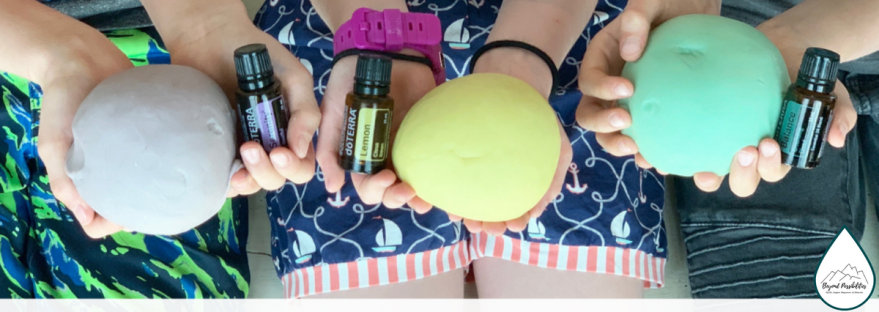
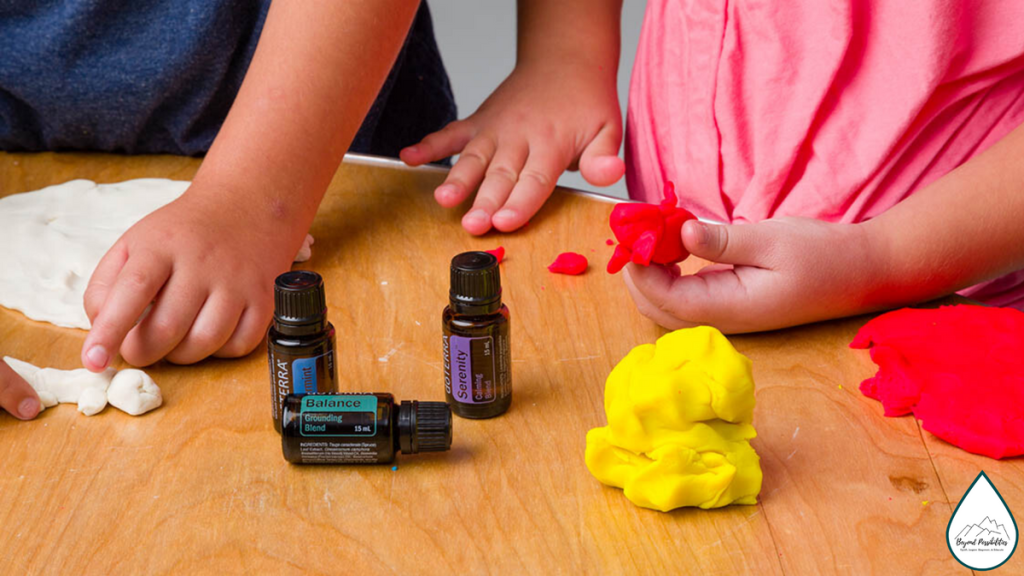
Entertain your kids this season by turning play time into learning time by making aromatherapy play dough! This activity is a great way for children to learn about aromatherapy and essential oils. Use a variety of oils and colors to help kids learn new scents. Some fun essential oils could include: Balance, Adaptiv, Wild Orange, Peppermint, Lemon, Rosemary, or Lavender essential oil.
Version One
Ingredients 2 cups all-purpose flour 3/4 cup salt 4 teaspoons cream of tartar 2 cups lukewarm water 2 Tablespoons of vegetable oil (coconut oil works too) Food coloring, optional doTERRA Oils of your choice Quart sized bags
Instructions Stir together the flour, salt, and cream of tartar in a large pot. Next, add the water and oil. If you’re only making one color, add in the color now as well. Cook over medium heat, stirring constantly. Continue stirring until the dough has thickened and begins to form into a ball. Remove from heat and then place inside a gallon sized bag or onto wax paper. Allow to cool slightly and then knead until smooth. If you’re adding colors after, divide the dough into balls (for how many colors you want) and then add the dough into the quart sized bags. Start with about 5 drops of color and add more to brighten it. Knead to spend evenly. Do the same with your oils. Start with 5-10 drops and add more if needed. Once it’s all mixed together you’re ready to PLAY.
Version Two
Ingredients 2 cups flour 2 cups colored water 1 cup salt 1 tablespoon olive oil 1 teaspoon cream of tartar 5 drops of essential oils
Instructions
Combine all ingredients, except for essential oils, in a large saucepan and stir until combined. Once combined, put over medium heat. Using a spatula, continue to stir ingredients together until it forms a ball. Note: Don’t overcook as it will lead to dry play dough. Remove from heat and cool on parchment paper. Once cool, add five drops of your favorite essential oil and knead until thoroughly combined. You’re done! Just store in an air-tight container in the refrigerator for months of fun.
Supports nervous system regulation while staying gently engaged
Balance – grounding and stabilizing
Frankincense – deepens breath and presence
Bergamot – uplifts while calming
Adaptive – supports stress resilience
Shinrin-Yoku – inspired by forest bathing, promotes grounding, reduces mental fatigue, and supports a calm, centered state during light activity
✨ Shinrin-Yoku is especially powerful during:
Nature walks
Breathwork
Quiet reflection
Transition moments in your day
🔄 Active Recovery Support
Deep Blue – muscle soothing
Copaiba – calming and recovery support
Eucalyptus – respiratory support
Rosemary – circulation support
🛌 Rest Support
Vetiver – deeply calming
Sandalwood – grounding
Ylang Ylang – tension relief
💪 Recovery Support
Frankincense – cellular support
Lemon – uplifting
Tea Tree – cleansing
On Guard – immune support
🛠️ Integrated doTERRA Daily Protocols
Supporting your body throughout the day— not just at night—is what changes everything.
🌅 Morning: Gentle Activation + Grounded Energy
Goal: Wake the body without triggering stress
Routine:
Diffuse: Lemon + Rosemary
Apply: Balance to feet/spine
Optional: Deep Blue for physical tension
🌿 Midday Reset: Active Rest in Real Life
Goal: Prevent overwhelm and reset your nervous system
Routine:
Inhale: Adaptive or Bergamot
Apply: Frankincense to wrists
Use: Shinrin-Yoku during a 5–10 minute walk or quiet pause
Why this matters: Shinrin-Yoku enhances the experience of “forest bathing,” which has been associated with reduced stress and improved mood through sensory engagement with nature.
🔄 Post-Activity: Active Recovery
Goal: Support the body after exertion
Routine:
Apply: Deep Blue + Copaiba
Diffuse: Eucalyptus
Gentle stretching
🌙 Evening Wind-Down
Goal: Signal safety and prepare for rest
Routine:
Diffuse: Balance + Frankincense
Apply: Vetiver or Sandalwood
Breathwork
💤 Night Routine: Sleep Support
Goal: Improve sleep quality and depth
Routine:
Diffuse: Lavender + Serenity
Apply: Lavender to feet or pillow
Optional: Roman Chamomile to chest
➡️ Shown to support sleep quality and relaxation (Tian et al., 2022)
🔄Meditation and Music to Support Rest & Recovery
💬 Truth to Hold Onto
You are not tired because you are doing something wrong.
You are tired because your body has been holding more than it was meant to carry without rest.
And your body isn’t asking for perfection— it’s asking for support.
✨ Final Thoughts
What if rest isn’t something you have to chase… but something you can gently return to?
And what if, through small, intentional shifts— breath, movement, environment, and support—
you could finally feel what it means to be restored?
📚 APA 7 References
Lillehei, A. S., & Halcon, L. L. (2014). A systematic review of the effect of inhaled essential oils on sleep. Journal of Alternative and Complementary Medicine, 20(6), 441–451. https://doi.org/10.1089/acm.2013.0311
Tian, L., et al. (2022). Aromatherapy with essential oils and sleep quality: A meta-analysis. BMC Complementary Medicine and Therapies. https://doi.org/10.1186/s12906-022-03668-0
Kim, J., et al. (2024). Effects of lavender essential oil on psychological and physiological responses: A meta-analysis. Asian Journal of Beauty and Cosmetology.
Öztürk, G. Y., et al. (2024). Effect of lavender oil on sleep and anxiety. Journal of Traditional Complementary Medicine.
I grew up hating my self. There was not anything about me that someone did not tell me I need to do differently. I was a Tommy Boy, over weight, struggled with reading and school (diagnosed with dyslexia in the 3rd grade). I tried to change who I was to fit the many influences. But with a select few friends I was able to just be me. I will forever be grateful to Kim and her family who never tried to change anything. They just loved me.
Unfortunately, I fell in love with someone who I thought loved me too, but as soon as we were married, he wanted me to change everything about me. His abuse started off with verbal abuse which then turned sexual and then physical.
Amazingly, Joseph saw me. When he told me that he could see himself married to me, I tried to tell him how broken I was. I did not believe I was loveable and I did not love myself. I was ashamed of who I was and what I have been through.
Joseph and I married in 1999, we started a family. He saw through my trauma and triggers and he encouraged me to get help. He was my soft place to fall when I was not strong enough to stand.
While working for Two Little Hands Products they offered the employees training that was a self-discovery seminar. Joseph also went through the seminar and that is where everything started changing. Not changing because someone was telling me I needed to be different, but because I started learning that there was nothing wrong with me. My past was just what happened not who I was.
A friend I made during the seminar gave me the book “Remembering Wholeness” by Carol Tuttle. Joseph, got it for me on Audible so I could listen and follow along. I learned how to reconnect to my spiritual roots, to stop identifying myself through the eyes of others, my past, my fears and my failures. I learned that my thoughts shape my reality. I started following her work, I learned EFT and started learning more about other energy-clearing techniques.
For the first time I started love learning. The more I listened while following with books the easier reading became. I still us that technique as I have much better understanding and recall when I listen and follow along. I also started asking who God saw me as and what he needed me to become.
Along this journey, I started using essential oils and in October of 2013 I became a doTERRA Wellness Advocate. At my first doTERRA Convention, I felt inspired to start blogging about my experiences with mental health and abuse. Joseph was my biggest supported as I started sharing. But not everyone in my life where as supportive. In 2014 I became Certified as an AromaDance Instructor and Certified in AromaTouch Technique. In January of 2018 I became Certified Essential Oil Coach. This allowed me to see that I could do hard things. I kept finding things that interested me and that helped me learn more about myself.
Over 10 years ago Mary Lambert – Secrets became my theme song. I no longer care if people know about my past and my insecurities.
In 2019, Ronai Brumett introduced me to the work of Bradley Nelson and the Emotion Code. In May of 2020 I completed my Emotion Code Practitioner Certification. In July of 2021 I completed my Body Code Certification.
In January of 2022, I started something I never thought I would do. I want back to school to get my degree. Although I loved learning college is hard. While doing college in n July of 2024 I completed my Belief Code Certification. In October 2025 I completed my Associate of Applied Science in Family and Human Services from Brigham Young University Idaho.
Along the way I started learning to love myself. I am not perfect at it. I spent over 40 years hating a lot of things about myself. As I have used the skills I have learned with Essential Oils, Emotion Code, Body Code, Belief Code, AromaDance, Mindful Movement, and through my college education I have release things that no longer serve me and I started loving pieces of myself. I am a work in process and I am grateful for who I am.
For one of my class projects I focused on selfcare without the guilt. This was not easy, but over the 4 weeks I started seeing the benefits of taking care of myself first. I discovered that self-care is not selfish—it is foundational. It is the fuel that supports your mind, body, and spirit, allowing you to show up fully in your life rather than running on empty. When you honor your need for rest, nourishment, connection, and regulation, you are not taking away from others—you are strengthening your capacity to love, serve, create, and heal. Self-care is an act of wisdom, stewardship, and self-respect.
I have created a journal to help you do what I did for myself.
During the process I have found what selfcare method support me for different situation. Dance is one of my best tool. Along the way I came across two more theme song for my journey. I am grateful for the Positivity Able Heart is putting out into the world. I think we are kindred spirits. Give them a listen.
As I began practicing self-care intentionally—without guilt, without justification, and without waiting until everything else was done—I noticed something profound: my capacity to cope, connect, and heal expanded. What started as a deeply personal journey slowly became something I wanted to understand more fully. I didn’t just want to know that self-care felt helpful—I wanted to know whether it was supported, especially for those of us who have lived with trauma, burnout, or years of believing our needs didn’t matter.
What I discovered was validating and freeing: modern, peer-reviewed research consistently shows that self-care is not selfish, indulgent, or optional—it is foundational. The very practices we are often taught to feel guilty for—rest, emotional regulation, boundaries, reflection, and nourishment—are the same practices shown to protect mental health, reduce stress and burnout, and support long-term resilience. Science now confirms what many of us learn the hard way: caring for ourselves is not taking away from others; it is what allows us to show up fully, sustainably, and authentically.
The research below helps remove guilt from self-care by reframing it as a necessary, evidence-based component of well-being. It supports what this journal is designed to do—help you honor your needs without shame, choose care without apology, and understand that tending to your mind, body, and spirit is not a failure of strength, but an expression of it.
Self-care practices—intentional actions individuals take to maintain or improve their physical, mental, and emotional health—have been consistently linked to improved psychological well-being and reduced stress. Research indicates that engaging regularly in activities such as mindfulness, physical rest, and holistic health behaviors strengthens resilience and mitigates the effects of stress, burnout, and psychological distress across diverse populations (Tushe, 2025). For example, studies show that structured self-care activities such as mindfulness training can significantly decrease stress and burnout while enhancing psychological resilience in students and professionals alike, suggesting that these practices function as protective factors in the face of ongoing demands rather than indulgences (Chen et al., 2025; Kwon, 2023). This evidence underscores self-care as a proactive lifestyle component that supports long-term adaptive functioning rather than a luxury reserved for the “less busy.”
Empirical research further demonstrates that self-care supports emotional regulation and mental well-being by fostering mindful awareness and self-compassion, which are associated with better stress management and interpersonal functioning. Systematic reviews and meta-analyses find that regular engagement in mindful self-care practices correlates with positive mental health outcomes, including increased self-acceptance, emotional balance, and reduced burnout symptoms in various helping professions (Monroe et al., 2021; moment). These outcomes show that self-care enables individuals to remain present, manage daily stressors effectively, and engage with life more fully—not because they are indulgent, but because they build essential psychological capacities that sustain performance, relationships, and overall health.
Importantly, research also highlights that self-care is not equally easy to adopt in conditions of elevated stress, which can paradoxically make people feel guilt or pressure when they struggle to practice it. Studies examining self-care behaviors during stressful situations such as the COVID-19 pandemic show that higher perceived stress can negatively impact the likelihood of engaging in self-care, which in turn weakens its beneficial effects on well-being (BMJ Open, 2021). This finding highlights a common challenge: guilt or internal resistance toward self-care may arise when it feels difficult, but the evidence clearly points to self-care as a key mediator that improves psychological health when regularly enacted. Rather than being selfish, self-care has a vital role in preserving wellness across life’s demands.
Loving Me
by LeeAnn Mason
I am removing the labels and stories that defined me
I am healing the child I am setting them free
I have been broken I have been beaten but they’re not going to win
I am choosing to stand up to heal from within
I am safe to feel
I am safe to heal
I am am loving me
I release what no longer serves me
I receive all that God created me to be
I am choosing the unique strengths God gave me
I am choosing to love and heal to serve myself free
I have overcome the strife
I give gratitude to every part of my life
I no longer beg I no longer fight
I claim my power, love and light
I am safe to feel
I am safe to heal
I release what no longer serves me.
I receive all god created me to be
I am am loving me
I set myself free
Created by LeeAnn Mason/Beyond Possibilities LLC with AI.
Reference List
Ayala, E. E., Winseman, J. S., & Johnsen, R. D. (2018). U.S. medical students who engage in self-care report less stress and higher quality of life. BMC Medical Education, 18, 189. https://doi.org/10.1186/s12909-018-1296-x
Chen, S., Qi, X., & colleagues. (2025). A randomized controlled trial of mindfulness: Effects on academic stress, academic burnout, and psychological resilience in university students. Frontiers in Psychology. https://doi.org/10.3389/fpsyg.2025.1722669
Kwon, J. (2023). Self-care for nurses who care for others: The effectiveness of meditation as a self-care strategy. Religions, 14(1), 90. https://doi.org/10.3390/rel14010090
Monroe, C., Loresto, F., Horton-Deutsch, S., Kleiner, C., Eron, K., Varney, R., & Grimm, S. (2021). The value of intentional self-care practices: The effects of mindfulness on improving job satisfaction, teamwork, and workplace environments. Archives of Psychiatric Nursing, 35(2), 189–194. https://doi.org/10.1016/j.apnu.2020.10.003
BMJ Open. (2021). Relationship between self-care activities, stress and well-being during COVID-19 lockdown: A cross-cultural mediation model. BMJ Open, 11(12), e048469. https://bmjopen.bmj.com/content/11/12/e048469
Tushe, M. (2025). The role of self-care practices in mental health and well-being: A comprehensive review. Journal of Nephrology & Endocrinology Research, SRC/JONE-148.
There’s a moment every couple remembers—the season when connection felt effortless, laughter came easily, and love felt alive in every interaction. Over time, responsibilities grow, routines settle in, and that spark can feel quieter. Yet relationship science offers reassuring truth: love does not fade because it is meant to—love shifts when it is no longer intentionally nurtured.
Research consistently shows that the qualities we associate with “falling in love” are not accidents of timing. They are the result of shared experiences, emotional responsiveness, novelty, and intentional connection—all of which can be restored and strengthened, even years into marriage.
Remembering Why You Fell in Love
Early romantic love is marked by curiosity, excitement, shared discovery, and emotional closeness. The self-expansion model of close relationships explains that people feel more connected and satisfied when they engage in novel, activating activities together, expanding their sense of self through shared experiences (self-expansion as defined and supported by research on couples’ conjoint activity engagement; see Debrot et al., 2013; and affective experience sampling research by Reis et al., 2004). In other words, the very activities that helped partners connect early in their relationship—trying new things, laughing together, exploring life side by side—are foundational to ongoing connection.
As life becomes more predictable, many couples unintentionally shift from intentional connection to functional partnership. While teamwork is important, studies show that relationships thrive when couples continue to engage in shared experiences that evoke positive affect, increase activation, and promote closeness (Reis et al., 2004), rather than just daily obligation.
Remembering why you fell in love is less about revisiting the past and more about re-creating the conditions that allowed love to flourish in the first place.
Rekindling the Spark Isn’t Accidental—It’s Intentional
The idea of “keeping the spark alive” is often romanticized, but research frames it through the lens of relationship maintenance behaviors—intentional actions couples take to sustain closeness, satisfaction, and emotional connection. Expressing appreciation, offering reassurance, communicating openly, sharing affection, and spending quality time together are all forms of relational maintenance that predict long-term satisfaction and stability.
These maintenance behaviors are not just feel-good exercises; they are mechanisms through which partners communicate responsiveness and commitment, supporting emotional intimacy and mutual trust over time. Partners who engage in these behaviors tend to experience higher relationship satisfaction and emotional closeness, even amid life’s complications.
Emotional intimacy grows through responsiveness—feeling seen, heard, and valued by your partner. Structured couple-level research indicates that interventions which increase emotional availability and reduce defensive patterns correspond with improvements in intimacy and relationship satisfaction, reinforcing the idea that closeness is cultivated through compassionate interaction rather than coincidence.
Why Dating Still Matters in Marriage
Dating doesn’t end at “I do.” In fact, it becomes even more important.
Intentional couple time—often described as date nights or shared leisure activities—functions as a powerful relationship maintenance tool. When partners devote quality time to one another outside of chores, schedules, and obligations, they reinforce the friendship and emotional connection at the core of their bond. Research linking shared activities with positive relationship outcomes shows that partners who engage in exciting or activating experiences together report increased relationship satisfaction and affective connection, suggesting that these moments of shared joy and novelty contribute meaningfully to ongoing relational quality.
Dating doesn’t have to be elaborate or expensive. What matters most is intentional presence—choosing one another again and again, even in the midst of life’s demands.
Gratitude Over Attitude: A Foundation for Connection
In the midst of busy schedules and daily stressors, it can be easy to let frustration speak louder than appreciation. Yet gratitude is one of the most powerful relational resets available. Longitudinal research shows that gratitude motivates reciprocal maintenance behaviors: feeling appreciated by a partner increases one’s responsiveness to a partner’s needs, which in turn nourishes relationship stability and satisfaction over time (Algoe et al., 2010; overall evidence on gratitude and relationship maintenance).
Feeling genuinely appreciated also buffers couples against negative communication patterns and stress, protecting relationship quality even when conflict arises. Simply put, when partners consistently express and perceive gratitude, they are more likely to maintain behaviors that support intimacy and interdependence.
Keeping the Spark Alive: A Gentle Reframe
From a scientific perspective, love is not something we lose—it’s something we stop feeding. When couples prioritize shared joy, emotional safety, appreciation, and meaningful connection, satisfaction and intimacy grow. Rekindling the spark doesn’t mean going backward—it means moving forward together with awareness and choice.
At Beyond Possibilities, we believe relationships thrive when they are tended with compassion, curiosity, and intention.
Love is not a moment. It is a practice. And it is always within reach.
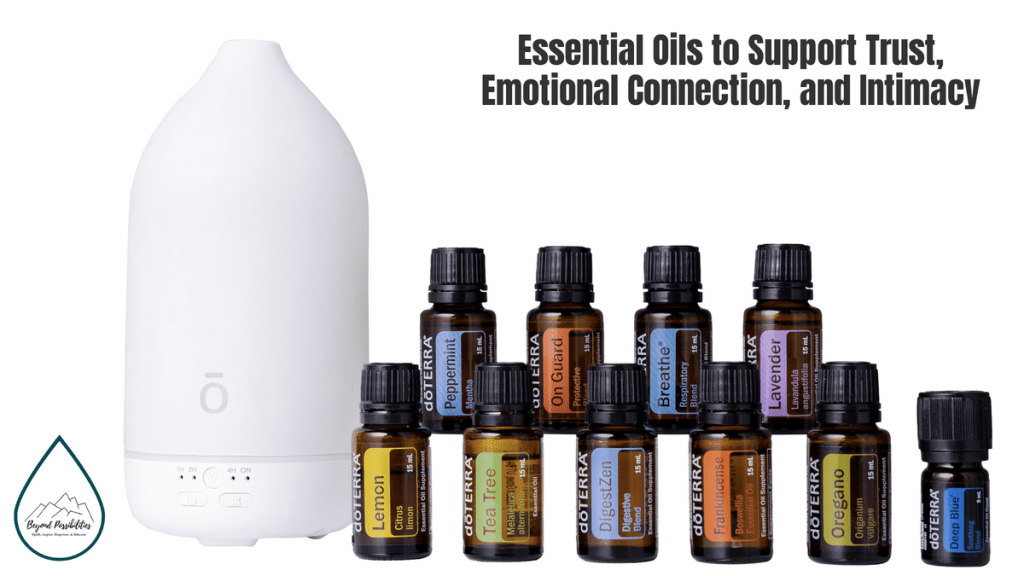
Essential Oils to Support Trust, Emotional Connection, and Intimacy*
Healthy relationships are not built on chemistry alone—they are cultivated through emotional safety, trust, and intentional presence. When the nervous system feels calm and supported, it becomes easier to connect, communicate, and experience closeness on a deeper level.
Aromatherapy has been widely explored for its influence on mood, emotional regulation, and stress response. These factors directly affect how we show up in our relationships—especially during moments of vulnerability, conflict, or emotional fatigue. While essential oils are not a replacement for communication or relational work, they can serve as supportive tools that help create an environment where connection feels safer and more accessible.
When used aromatically, doTERRA® pure tested grade essential oils can become part of shared rituals—such as evening wind-down routines, intentional conversations, or date nights—helping shift the body and mind into a more receptive, present state.
Supporting Trust & Emotional Safety
Trust begins when the body feels safe. Oils that promote calm, grounding, and emotional regulation can support a sense of stability and reassurance—especially for those navigating stress, past experiences, or emotional walls.
Lavender
Lavender is one of the most researched essential oils for relaxation and emotional calm. Aromatically, it is commonly used to support restfulness and soothe heightened emotional states. When tension softens, conversations often feel less reactive and more open.
Best used: Diffused during quiet evenings, before meaningful conversations, or as part of a bedtime ritual.
doTERRA Balance® Grounding Blend
Balance® combines grounding woods and resins traditionally associated with stability and emotional centering. Aromatic use may support feelings of calm and equilibrium, which can help partners feel more emotionally anchored during moments of uncertainty or stress.
Best used: Diffused before difficult discussions or applied aromatically during moments when emotional regulation is needed.
Frankincense
Often associated with mindfulness and reflection, Frankincense is used aromatically to promote a sense of peace and emotional awareness. It can support intentional presence—helping individuals slow down and truly listen.
Best used: During intentional connection time, prayer, meditation, or reflective conversations.
Birch
Birch is traditionally associated with renewal, resilience, and emotional release. Aromatically, it is often used to support letting go of emotional burdens, rigidity, or lingering stress that can create emotional distance in relationships. Birch may be especially supportive when trust has been strained and the body is holding onto protective tension.
By encouraging emotional flexibility and a sense of internal reset, Birch can help create space for forgiveness, rebuilding trust, and moving forward together.
Best used: Diffused during moments of emotional repair, after difficult conversations, or when working through lingering emotional weight from past experiences.
Supporting Emotional Connection
Emotional connection grows when individuals feel emotionally open, seen, and understood. Oils that uplift mood and encourage emotional expression may help soften emotional distance and promote warmth.
Bergamot
Bergamot is known for its bright, citrus aroma with calming undertones. Aromatically, it is often used to promote emotional balance and reduce feelings of overwhelm, creating space for lighter, more open interaction.
Best used: Diffused during shared activities or casual connection time to support a relaxed, positive atmosphere.
Wild Orange
Wild Orange is uplifting and energizing, commonly used to promote positive mood and emotional optimism. It can help shift heavy emotional states into a more playful, connected energy.
Best used: During daytime connection, shared laughter, or when emotional heaviness feels present.
Rose
Rose is often associated with compassion, emotional openness, and nurturing connection. Aromatically, it may support feelings of love, tenderness, and emotional closeness—particularly when vulnerability feels challenging.
Best used: During intentional connection rituals or moments of emotional sharing.
Supporting Intimacy & Closeness
Intimacy thrives when stress is reduced and emotional presence is increased. Oils that promote relaxation, sensual awareness, and emotional softness can help couples reconnect in meaningful ways.
Ylang Ylang
Ylang Ylang is traditionally used to support relaxation and emotional balance. Aromatically, it may help release tension and encourage a sense of ease and openness, supporting both emotional and physical closeness.
Best used: Diffused during date nights, evening wind-down routines, or intentional intimacy time.
Sandalwood
Sandalwood is grounding and calming, often associated with emotional depth and mindfulness. Aromatic use can support presence and emotional awareness, helping partners feel more connected and engaged.
Best used: During slow, intentional moments of connection or relaxation.
Creating Intentional Connection Rituals
The power of essential oils in relationships is not about the scent alone—it is about intention and presence. When oils are used intentionally, they become cues for pause, mindfulness, and emotional availability.
Simple rituals might include:
Diffusing a chosen oil during weekly check-ins
Using a calming blend before important conversations
Creating a shared evening routine to unwind together
Pairing aromatherapy with breathwork, prayer, or reflection
These moments reinforce emotional safety and trust by signaling to the nervous system that it is safe to slow down and connect.
*The information provided is for educational purposes only. doTERRA essential oils are not intended to diagnose, treat, cure, or prevent any disease. Individual experiences may vary.
References (APA 7)
Algoe, S. B., Gable, S. L., & Maisel, N. C. (2010). It’s the little things: Everyday gratitude as a booster shot for romantic relationships. Personal Relationships, 17(2), 217–233. https://doi.org/10.1111/j.1475-6811.2010.01233.x
Debrot, A., Schoebi, D., Perrez, M., & Horn, A. B. (2013). Self-expansion and flow in couples’ momentary experiences: An experience sampling study. Journal of Personality and Social Psychology. https://pubmed.ncbi.nlm.nih.gov/18729702
Algoe, S. B., & Fredrickson, B. L. (2013). The social functions of the emotion of gratitude via expression. Emotion, 13(4), 605–609. (Referenced within relational gratitude literature)
(To strengthen your post, you may add further specific citations on relationship maintenance behaviors and emotional intimacy from your own library or other peer-reviewed sources.)
Overall well-being is muti-faceted combining nutrition, physical movement, mindful practices, spiritual practices, nature exposure, social connection, gratitude, sensory support and emotional expression. Evidence-based tools enhance resilience and well-being, but they do not replace when clinical treatment is needed.
Mental health is not supported by a single practice it is shaped by daily habits that influence the brain, nervous system, hormones, immune response, emotional resilience, and overall sense of well-being. A growing body of research confirms that nutrition, movement, mindfulness, emotional expression, nature, connection, and sensory input all play measurable roles in supporting anxiety, depression, and mental health. By taking a whole-person approach that natures the mind, body, nervous system, and spirit, these evidence-based strategies work the body’s innate capacity for the balance and healing, helping to strengthen emotional resilience and reduce feelings of stress, anxiety, and depression.
Nutrition & Gut-Brain Support
The gut and brain communicate bidirectionally through neural, immune, and hormonal pathways—commonly referred to as the gut-brain axis. Research demonstrates that diet quality and gut microbiota composition influence mood, stress reactivity, and cognitive function. Diets rich in fiber, omega-3 fatty acids, fermented foods, and polyphenols are associated with lower rates of depression and anxiety, while highly processed diets correlate with increased psychological distress (Dinan & Cryan, 2017; Marx et al., 2021).
Emerging evidence suggests that supporting gut health through whole foods, probiotics, and anti-inflammatory nutrition may positively influence neurotransmitter production (including serotonin and GABA) and reduce systemic inflammation linked to mood disorders (Johnson & Foster, 2018).
Physical Activity & Movement
Physical activity is one of the most consistently supported non-pharmacological interventions for mental health. Systematic reviews and meta-analyses show that regular movement—ranging from aerobic exercise to yoga and gentle stretching—reduces symptoms of depression and anxiety across age groups (Schuch et al., 2016).
Exercise enhances neuroplasticity, increases brain-derived neurotrophic factor (BDNF), and regulates stress hormones such as cortisol. Importantly, benefits are not limited to high-intensity workouts; moderate, enjoyable movement practiced consistently provides meaningful psychological benefit (Biddle et al., 2019).
Meditative, Spiritual, & Mind-Body Practices
Mind-body practices such as mindfulness meditation, breathwork, prayer, and contemplative movement engage brain regions involved in emotional regulation, attention, and self-awareness. Mindfulness-based interventions (MBIs) have demonstrated significant reductions in anxiety and depressive symptoms, comparable in some cases to conventional treatments (Goldberg et al., 2018).
Faith, prayer, and scripture study support mental health by fostering emotional resilience, reducing stress, and providing a sense of purpose. Prayer and mediation act as calming mechanism. Reading scripture provides encouragement, guidance, and builds hope during difficult times. Faith provides a sense of meaning and purpose which is important to mental health.
These practices calm the autonomic nervous system, reduce rumination, and support parasympathetic activation—allowing the body to shift out of chronic stress states. Spiritual or meaning-centered practices further enhance resilience by fostering purpose, hope, and emotional integration (Cramer et al., 2024).
Gratitude, Journaling & Emotional Expression
Emotional expression is a critical component of psychological health. Gratitude practices and expressive writing have been shown to improve mood, increase positive affect, and reduce stress and depressive symptoms (Wood et al., 2010). Journaling allows individuals to process emotions cognitively and physiologically, reducing emotional suppression that can contribute to psychological and somatic distress.
Expressive writing has also been associated with improved immune markers and reduced physiological stress responses, reinforcing the mind-body connection in emotional healing (Pennebaker & Chung, 2011).
Time spent in nature has measurable benefits for mental health. Systematic reviews indicate that nature-based interventions—including walking in green spaces, forest bathing, and outdoor recreation—significantly reduce anxiety, depression, and perceived stress (Shanahan et al., 2024).
Nature exposure supports nervous system regulation, lowers cortisol, and enhances attentional restoration. Even brief, regular contact with natural settings can improve mood and emotional well-being, making it a highly accessible mental health support (Bratman et al., 2019).
Social Connection & Support
Humans are biologically wired for connection. Strong social relationships are protective against depression, anxiety, and stress-related disorders, while loneliness is now recognized as a significant risk factor for mental and physical illness. Social support buffers stress responses and promotes emotional regulation through neurobiological pathways involving oxytocin and reduced inflammatory signaling (Holt-Lunstad et al., 2015).
Meaningful connection—whether through family, friendships, faith communities, or support networks—plays a foundational role in long-term mental well-being.
Aromatherapy & Sensory Support
Sensory input directly influences the limbic system, the brain’s emotional center. Aromatherapy, particularly through inhalation, has been studied for its effects on anxiety, stress, and mood. Open-access randomized controlled trials and systematic reviews indicate that certain essential oils—most notably lavender—are associated with reduced anxiety levels and improved emotional calm in clinical and non-clinical populations (Koulivand et al., 2013; Donelli et al., 2019).
While aromatherapy is best viewed as a supportive modality rather than a standalone treatment, sensory practices such as scent, touch, sound, and breath can help regulate emotional states and enhance relaxation when integrated into broader wellness routines.
Mental health support is most effective when it addresses the interconnected systems of the body and mind. Scientific evidence affirms that nutrition, movement, mindfulness, emotional expression, nature exposure, social connection, and sensory support each contribute uniquely—and synergistically—to emotional resilience and psychological well-being. These natural, research-supported strategies do not replace professional care when needed, but they create a strong, sustainable foundation for healing, balance, and long-term mental wellness.
Disclaimer
The information provided in this blog is for educational and informational purposes only and is not intended to diagnose, treat, cure, or prevent any medical or mental health condition. The content shared reflects current peer-reviewed research on natural and supportive approaches to mental wellness and is not a substitute for professional medical advice, diagnosis, or treatment. Always seek the guidance of a qualified healthcare provider, licensed mental health professional, or physician with any questions regarding your health, mental well-being, or medical conditions. If you are experiencing severe, persistent, or worsening symptoms, or are in crisis, please seek immediate professional support or emergency care.
References
Biddle, S. J. H., Ciaccioni, S., Thomas, G., & Vergeer, I. (2019). Physical activity and mental health in children and adolescents: An updated review of reviews and an analysis of causality. Psychology of Sport and Exercise, 42, 146–155. https://doi.org/10.1016/j.psychsport.2018.08.011
Bratman, G. N., Anderson, C. B., Berman, M. G., Cochran, B., de Vries, S., Flanders, J., … Daily, G. C. (2019). Nature and mental health: An ecosystem service perspective. Science Advances, 5(7), eaax0903. https://doi.org/10.1126/sciadv.aax0903
Cramer, H., Lauche, R., & Dobos, G. (2024). Mind-body medicine in the treatment of depression: A narrative review of mechanisms and efficacy. BMC Complementary Medicine and Therapies, 24, 101. https://www.ncbi.nlm.nih.gov/pmc/articles/PMC11706891/
Dinan, T. G., & Cryan, J. F. (2017). The microbiome-gut-brain axis in health and disease. Gastroenterology Clinics of North America, 46(1), 77–89. https://doi.org/10.1016/j.gtc.2016.09.007
Donelli, D., Antonelli, M., Bellinazzi, C., Gensini, G. F., & Firenzuoli, F. (2019). Effects of lavender on anxiety: A systematic review and meta-analysis. Phytomedicine, 65, 153099. https://www.ncbi.nlm.nih.gov/pmc/articles/PMC6827865/
Goldberg, S. B., Tucker, R. P., Greene, P. A., Davidson, R. J., Wampold, B. E., Kearney, D. J., & Simpson, T. L. (2018). Mindfulness-based interventions for anxiety and depression: A systematic review and meta-analysis. Journal of Psychiatric Research, 104, 163–182. https://www.ncbi.nlm.nih.gov/pmc/articles/PMC5679245/
Holt-Lunstad, J., Smith, T. B., Baker, M., Harris, T., & Stephenson, D. (2015). Loneliness and social isolation as risk factors for mortality: A meta-analytic review. Perspectives on Psychological Science, 10(2), 227–237. https://doi.org/10.1177/1745691614568352
Johnson, K. V.-A., & Foster, K. R. (2018). Why does the microbiome affect behaviour? Nature Reviews Microbiology, 16, 647–655. https://doi.org/10.1038/s41579-018-0014-3
Koulivand, P. H., Khaleghi Ghadiri, M., & Gorji, A. (2013). Lavender and the nervous system. Evidence-Based Complementary and Alternative Medicine, 2013, 681304. https://www.ncbi.nlm.nih.gov/pmc/articles/PMC3612440/
Marx, W., Moseley, G., Berk, M., & Jacka, F. (2021). Nutritional psychiatry: The present state of the evidence. Proceedings of the Nutrition Society, 80(4), 427–436. https://www.ncbi.nlm.nih.gov/pmc/articles/PMC8509609/
Schuch, F. B., Vancampfort, D., Richards, J., Rosenbaum, S., Ward, P. B., & Stubbs, B. (2016). Exercise as a treatment for depression: A meta-analysis. Journal of Psychiatric Research, 77, 42–51. https://www.ncbi.nlm.nih.gov/pmc/articles/PMC474733/
Shanahan, D. F., et al. (2024). Effect of nature-based health interventions for individuals with anxiety, depression and/or stress: A systematic review and meta-analysis. Healthcare, 12(22), 2263. https://www.mdpi.com/2227-9032/12/22/2263
Wood, A. M., Froh, J. J., & Geraghty, A. W. A. (2010). Gratitude and well-being: A review and theoretical integration. Clinical Psychology Review, 30(7), 890–905. https://www.ncbi.nlm.nih.gov/pmc/articles/PMC3010965/




 Beyond Possibilities