How Dance Moves Emotions: The Science Behind Movement
Essential Oils, Health, Self-Discovery

How Dance Moves Emotions: The Science Behind Movement

Music begins. The body responds. Before words form, emotion is already in motion.

Dance has long been a language of the heart—used across cultures to express joy, grief, celebration, and release. Today, science confirms what many have felt intuitively: when we move rhythmically, we don’t just exercise the body—we process emotion, regulate stress, and reconnect with ourselves.

A growing body of science shows that participating in dance can improve mood, reduce anxiety and depression, and enhance emotional regulation across ages and settings. A growing body of science shows that participating in dance can improve mood, reduce anxiety and depression, and enhance emotional regulation across ages and settings.

What Science Says About Dance and Emotional Well‑Being

Dance Improves Mood and Reduces Anxiety and Depression

Scientific reviews of dance interventions report significant reductions in symptoms of depression, anxiety, and stress compared with no‑dance control conditions. Across multiple dance styles—from tango to Latin dance—participants consistently show improvements in mood and overall mental health (Koch, 2023).

Meta‑analytic findings further indicate that dance is equally or more effective than other forms of physical activity for improving quality of life and reducing anxiety and depressive symptoms. These outcomes are thought to be driven by dance’s unique blend of rhythmic movement, creative expression, and social engagement (Mann et al., 2023).

Among older adults, dance interventions have also been shown to improve mental health indicators, including depressive symptoms and neuropsychiatric outcomes, highlighting dance as a valuable, accessible approach across the lifespan (Taber et al., 2023).

Dance Supports Emotional Regulation

Dance Movement Therapy (DMT)—a structured, clinical application of movement—has been examined for its role in emotional regulation. Scientific reviews indicate that DMT supports emotional integration, expression, and regulation by engaging the body as a pathway to emotional processing (Smith & Jones, 2024).

Dance Enhances Social Connection and Positive Emotion

Science also demonstrates that dance supports social bonding and positive affect. Group dance participation has been associated with increased social connection and emotional well‑being when compared with other creative activities, suggesting that shared movement amplifies emotional resilience (Lee et al., 2025).

Key Findings from the Science

  • Improved mood and reduced depressive symptoms following dance participation (Koch, 2023; Mann et al., 2023)
  • Decreased anxiety and stress across diverse populations (Koch, 2023; Taber et al., 2023)
  • Enhanced emotional regulation and expression through embodied movement (Smith & Jones, 2024)
  • Increased social connection and positive emotional states (Lee et al., 2025)

How Dance Influences Emotions

1. Movement and Emotion Are Neurologically Linked

Dance combines aerobic activity with expressive movement, activating neurochemical pathways associated with improved mood while allowing emotions to be physically expressed and processed (Koch, 2023).

2. Embodied Awareness Supports Emotional Regulation

By engaging rhythm, coordination, and body awareness, dance naturally recruits attention and executive functioning. This embodied focus supports greater emotional control and integration, as observed in therapeutic movement settings (Smith & Jones, 2024).

3. Connection Through Movement Enhances Emotional Health

Dancing with others introduces social interaction that amplifies positive affect and reduces isolation—an important contributor to emotional well‑being (Lee et al., 2025).

How to Use Dance and Aroma Together: A Simple Practice

Whether dancing alone at home or in a group setting, pairing intentional movement with aromatic support can deepen emotional awareness and release.

A simple practice:

  1. Choose music that matches your emotional intention (uplifting, grounding, expressive, calming).
  2. Add a diffuser blend that complements that intention.
  3. Begin with gentle movement, allowing your body to respond naturally to the rhythm.
  4. Focus on breath and sensation rather than choreography.
  5. Close with stillness, noticing emotional shifts.

This approach works well for personal self-care, group classes, or emotional wellness sessions.

doTERRA Diffuser Blends to Support Emotional Experience While Dancing

Aromatherapy can support emotional states that complement the benefits of dance. The following doTERRA diffuser blends are designed to enhance mood, focus, grounding, and connection while dancing. Use essential oils according to safety guidelines.

Joyful Motion Blend

  • 3 drops Citrus Bliss®
  • 2 drops Lavender
  • 2 drops Bergamot

Supports uplifting energy and emotional lightness.

Flow State Dance Blend

  • 3 drops Wild Orange
  • 2 drops Peppermint
  • 1 drop Ylang Ylang

Encourages focus, rhythm, and creative flow.

Grounded Expression Blend

  • 3 drops Frankincense
  • 2 drops Balance®
  • 1 drop Vetiver

Promotes grounding and body‑mind connection.

Calm Release Blend

  • 3 drops Serenity®
  • 2 drops Roman Chamomile
  • 1 drop Lavender

Supports stress reduction and emotional release.

Connect and Socialize Blend

  • 3 drops Bergamot
  • 2 drops Wild Orange
  • 2 drops Birch

Encourages positive social energy and shared joy.

Closing Thoughts

Science continues to affirm what many feel intuitively: dance is a powerful emotional tool. By integrating physical movement, creative expression, and social connection, dance supports emotional health in ways that extend far beyond exercise. When paired with intentional aromatherapy using doTERRA essential oils, dance becomes a holistic, heart‑centered practice for emotional well‑being.

If this topic resonates with you and you’d like to explore movement and emotions more deeply, I invite you to continue the journey through other blogs here on Beyond Possibilities. You’ll find additional reflections and practices on mindful movement, AromaDance, and how emotions live and release through the body. Each piece builds on the understanding that when we move with intention, we create space for healing, clarity, and connection—one breath and one movement at a time.

Previous Resources on Movement, Emotion & Expressive Practices

AromaDance
A deep look at AromaDance as a modality that combines essential oils with expressive movement to release stress, encourage creative flow, and open emotional expression through movement.
Read it here: https://beyond-possibilities.net/mentoring-and-classes/aromadance/

Movement and Emotion: The Science of Feeling Through Motion
A thoughtful exploration of how emotions are embodied, how movement (including dance) affects the autonomic nervous system, and practical movement techniques to support emotional regulation and resiliency.
Read it here: https://beyond-possibilities.net/2025/10/17/movement-and-emotion-the-science-of-feeling-through-motion/

From Stuck to Free: Transform Your Wellness Journey with Mind-Body Practices
A holistic wellness post that includes how movement and dance release stagnant energy, improve mind-body connection, and support emotional well-being alongside meditation, aromatherapy, and energy healing.
Read it here: https://beyond-possibilities.net/2025/03/05/from-stuck-to-free-transform-your-wellness-journey-with-mind-body-practices/

Music, Movement, and Mood – Just Dance (linked within Mindful Movement Classes page)
A resource referenced on the Mindful Movement Classes page, offering an introduction to how music and spontaneous dance can uplift mood and release emotion. (Note: this is linked from the class description rather than a standalone blog post.)
Explore Mindful Movement Classes here: https://beyond-possibilities.net/mentoring-and-classes/mindful-movement-classes/

FDA Compliance Note

The information shared in this article is intended for educational purposes only. Essential oils are not intended to diagnose, treat, cure, or prevent any disease. Individual responses to aromatherapy may vary. Always follow manufacturer safety guidelines when using essential oils, especially around children, pets, or individuals with sensitivities.

References (APA 7)

Koch, S. (2023). Evidence of the effects of dance interventions on adults’ mental health: A systematic review. Frontiers in Psychology, 14, 1180566. https://pubmed.ncbi.nlm.nih.gov/37287281/

Mann, L., et al. (2023). The effectiveness of dance interventions on psychological and cognitive health outcomes compared with other physical activity. Arts & Health. https://pubmed.ncbi.nlm.nih.gov/38270792/

Taber, A., et al. (2023). Effects of dance therapy on cognitive and mental health in adults aged 55+ with mild cognitive impairment: A systematic review and meta‑analysis. BMC Geriatrics, 23, 553. https://bmcgeriatr.biomedcentral.com/articles/10.1186/s12877-023-04406-y

Smith, J., & Jones, R. (2024). The role of dance movement therapy in enhancing emotional regulation: A literature review. The Arts in Psychotherapy. https://pubmed.ncbi.nlm.nih.gov/39170197/

Lee, H., et al. (2025). The impact of performing arts on mental health, social connection, and creativity in university students: A randomized controlled trial. BMC Public Health, 25, 312. https://bmcpublichealth.biomedcentral.com/articles/10.1186/s12889-025-22552-3

Essential Oils, Health

Essential Oils to Support Emotions During Life Changes

Life transitions—whether welcomed or unexpected—have a way of stirring our emotions at a deep level. New seasons can bring excitement and hope, but they can also uncover feelings of fear, grief, uncertainty, or fatigue. During these moments, caring for our emotional well-being is not a luxury—it’s a necessity. Essential oils can serve as gentle, supportive tools to help calm the nervous system, ground emotions, and encourage resilience as we move through change with intention and self-compassion.

Below is a holistic, research-informed guide to essential oils that may help support emotional balance during times of transition.*


🌱 Grounding & Stability

For feeling unsteady, anxious, or overwhelmed

When life feels uncertain, grounding oils can help create a sense of safety and emotional steadiness.

  • Frankincense – Encourages calm breathing, clarity, and emotional grounding
  • Vetiver – Deeply grounding; helpful for restlessness and emotional exhaustion
  • Cedarwood – Promotes feelings of security, strength, and support
  • Patchouli – Anchoring and stabilizing during major identity or lifestyle shifts

How to use:
Diffuse 3–4 drops during quiet reflection, journaling, or prayer. Can also be applied (properly diluted) to the bottoms of the feet.


🌊 Emotional Release & Letting Go

For grief, sadness, or processing the past

Change often requires release. These oils support emotional expression and gentle comfort.

  • Lavender – Calms the nervous system and soothes emotional tension
  • Roman Chamomile – Comforting during grief, irritability, or overwhelm
  • Ylang Ylang – Encourages emotional release and heart openness
  • Bergamot – Supports emotional processing while lifting mood

How to use:
Apply diluted oil over the heart, wrists, or back of the neck during moments of heaviness.


🌸 Courage, Confidence & Forward Movement

For fear of the unknown or stepping into something new

These oils can help build inner strength and emotional resilience.

  • Ginger – Encourages courage and forward momentum
  • Black Pepper – Empowering and energizing during hesitation
  • Cardamom – Supports emotional strength and confidence
  • Cypress – Helpful for transitions and moving through change

How to use:
Diffuse in the morning or inhale from cupped hands before taking the next step forward.


☀️ Hope, Joy & Emotional Uplift

For discouragement, low mood, or lack of motivation

Uplifting oils can help restore optimism and lightness during challenging seasons.

  • Sweet Orange – Encourages joy and emotional warmth
  • Lemon – Clarifying, refreshing, and mentally uplifting
  • Grapefruit – Supports optimism and self-worth
  • Neroli – Comforting and hopeful, especially after loss or emotional trauma

How to use:
Diffuse mid-day or use in a personal inhaler for emotional refreshment.


🌿 Self-Compassion & Inner Peace

For burnout, self-criticism, or emotional fatigue

Change often calls us to slow down and nurture ourselves.

  • Rose – Deeply nurturing and heart-centered
  • Geranium – Balances emotions and supports self-acceptance
  • Clary Sage – Encourages emotional balance and trust
  • Sandalwood – Promotes inner peace and emotional grounding

How to use:
Diffuse during meditation, prayer, or evening wind-down routines.


🧴 Simple Diffuser Blend for Life Transitions

Grounded Hope Blend

  • 2 drops Frankincense
  • 2 drops Bergamot
  • 1 drop Cedarwood

This blend supports grounding, emotional clarity, and gentle optimism during times of change.


Final Thoughts

Life transitions invite growth, even when they feel uncomfortable. While essential oils are not a cure-all, they can be meaningful companions—offering moments of calm, clarity, and encouragement as you navigate change. Listen to your body, honor your emotions, and give yourself permission to move through each season at your own pace.


*These statements have not been evaluated by the Food and Drug Administration. Essential oils are not intended to diagnose, treat, cure, or prevent any disease. Always consult a qualified healthcare professional for medical or mental health concerns.

Essential Oils, Family Life Education, Self-Discovery

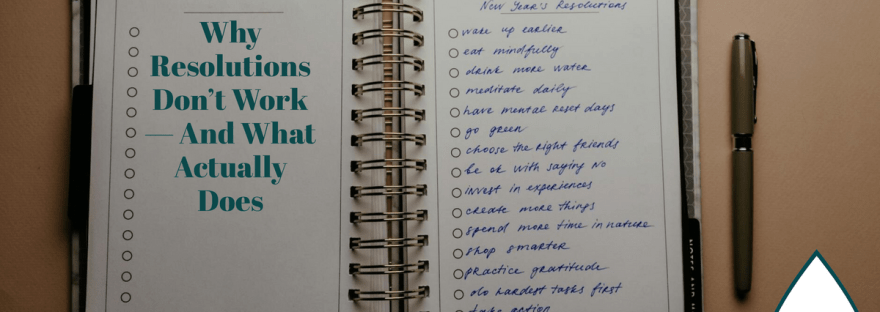
Why Resolutions Don’t Work — And What Actually Does

Every year, resolutions promise transformation. Eat better. Move more. Be more disciplined. And every year, many of those promises quietly dissolve, often replaced with guilt, frustration, and the belief that something is wrong with you.

But science tells a different story.

Resolutions don’t fail because people lack motivation or willpower. They fail because they are built on systems that ignore how the human body, brain, and nervous system actually create lasting change.

This is your permission slip to stop forcing yourself into frameworks that were never designed for your body, your strengths, or your life — and instead choose approaches that honor how change truly works.


The Resolution Myth

Traditional resolutions rely on rigid goals, arbitrary start dates, and outcome-focused expectations. While the idea of a “fresh start” can temporarily boost motivation, research shows that temporal landmarks alone do not sustain long-term behavior change without supportive structures embedded into daily life (Kooij et al., 2015).

Many resolutions are also vague (“be healthier”) or overly ambitious, leaving no clear path for action. When setbacks occur — as they inevitably do — people often interpret them as personal failure rather than part of the learning process. This mindset increases stress and disengagement, making consistency less likely.


Why Willpower Isn’t the Answer

Sustainable change is not a function of force. It is a function of conditions.

Behavioral science consistently shows that habits stick when they are:

  • Small and repeatable
  • Anchored to existing routines
  • Supported by emotional regulation and internal motivation

When stress levels are high, the brain prioritizes survival over growth. Under these conditions, willpower is unreliable. This is why systems rooted in guilt and pressure tend to collapse — they activate stress responses rather than support learning and adaptation.


Mindset, Self-Talk, and the Body: What the Science Shows

Research in mind-body medicine demonstrates that cognitive and emotional states meaningfully influence the physiological environments in which healing and change occur. Harvard Health Publishing has documented that the brain and immune system communicate bidirectionally, meaning thoughts, emotions, and stress perception can influence immune signaling, inflammation, and recovery processes (Harvard Health Publishing, n.d.).

Expanding on this connection, Harvard psychologist Ellen Langer’s work on mindfulness and perception has shown that psychological framing can measurably affect physical outcomes. In controlled research, altered perceptions of time significantly influenced the rate of physical healing, including bruise recovery, underscoring the role of awareness and expectation in bodily processes (Aungle & Langer, 2023).

Further supporting this, contemporary reviews of self-talk research demonstrate that intentional internal dialogue improves emotional regulation, stress resilience, and behavioral consistency — all factors that indirectly but powerfully support physical wellbeing by shaping nervous system responses and health-related behaviors (Brinthaupt & Morin, 2023).

Taken together, this evidence reframes change entirely: sustainable transformation does not emerge from self-criticism or force, but from cultivating internal conditions — safety, supportive self-talk, and reduced stress — that allow the body to function as designed.


Foundational Wellness Over Forced Change

Rather than resolutions that demand perfection, research supports foundational practices that build resilience and capacity over time:

  • Consistent sleep and recovery
  • Nourishment that stabilizes energy and mood
  • Gentle, repeatable movement
  • Emotional regulation and stress support

When these foundations are in place, behavior change becomes less about discipline and more about momentum.


Movement That Feels Good Actually Lasts

Movement is often positioned as punishment for not being “enough.” Science tells a different story.

Positive emotional responses to movement are among the strongest predictors of long-term adherence. Meta-analytic research shows that when physical activity is experienced as enjoyable rather than aversive, individuals are significantly more likely to sustain it over time (Rhodes et al., 2021). Moderate, self-selected activities — such as walking, gentle strength training, or mindful movement — consistently produce more positive affect than high-intensity approaches that may feel overwhelming, particularly early on.

Additionally, environments that support autonomy, competence, and connection further enhance intrinsic motivation and enjoyment, reinforcing consistency without relying on pressure or obligation (Boiché & Sarrazin, 2013).

Simply put: consistency grows from enjoyment, not punishment.

Find music that inspires you.

Body Groove just release a Manifesting Magic Through Movement that is beautiful. (I am not an affiliate, but a huge fan of their playlists.)


Supportive Tools for Sustainable Change: Essential Oils and Supportive Research

While behavior change is primarily psychological and neurological, supportive tools can meaningfully improve the internal and external environments in which habits grow. When stress is reduced and emotional regulation is supported, the body is better positioned to sustain consistent, health-supportive behaviors. Within this context, aromatherapy and essential oils have been studied for their effects on stress perception, mood regulation, sleep quality, and nervous system balance.

Stress, Mood, and Sleep Support

Randomized controlled trials have demonstrated that inhalation of specific essential oil blends can significantly reduce perceived stress and improve sleep quality — two foundational elements for recovery, emotional regulation, and sustainable behavior change. Improved sleep and reduced stress are strongly associated with better adherence to wellness routines, improved mood stability, and enhanced capacity for habit formation (Kim et al., 2017; Lee et al., 2021). These findings support the use of aromatherapy as a complementary practice to help lower physiological stress load and support restorative processes essential for long-term change.

Nervous System Effects

Scoping reviews of essential oil research indicate measurable effects on emotional modulation, anxiety reduction, stress regulation, sleep quality, and mental fatigue. These effects are believed to occur primarily through olfactory and respiratory pathways that influence limbic system activity and neurochemical signaling involved in emotional and autonomic regulation (de Rapper et al., 2023). By supporting nervous system balance, aromatherapy may reduce friction around daily wellness behaviors and improve consistency without relying on force or willpower.

AromaTouch® Technique Research

Pilot trials examining structured essential oil application procedures, such as the AromaTouch® Technique, have demonstrated enhanced relaxation responses and reductions in biomarkers associated with stress and inflammation when compared to control touch procedures (Bennett et al., 2017). These findings suggest that intentional, rhythmic application of essential oils combined with touch may further support parasympathetic activation, contributing to improved recovery and emotional regulation.

Importantly, evidence consistently supports essential oils as supportive tools, not drivers, of personal transformation. They assist the environment of change — reducing stress, supporting emotional balance, and improving recovery — rather than acting as the cause of behavioral or psychological change. When used alongside aligned mindset work, movement that feels good, and foundational wellness practices, essential oils can help make sustainable change feel more accessible and embodied.


A New Way Forward

This is not about lowering standards. It is about raising self-respect.

When you stop forcing yourself into systems that rely on guilt and willpower, and instead build change around how your body and brain actually work, something shifts.

Change becomes kinder.
More realistic.
And far more sustainable.


References (APA 7)

AromaTouch® technique trial:
Author(s). (Year). Immediate and lasting effects of the dōTERRA AromaTouch Technique on autonomic function and biomarkers: A pilot trial. Journal of Integrative Medicine and Therapy. avensonline.org

Aungle, P., & Langer, E. J. (2023). Physical healing as a function of perceived time. Scientific Reports, 13, Article 18454. https://doi.org/10.1038/s41598-023-45393-2

Behavior change and motivation theory:
Alberts, L., Lyngs, U., & Lukoff, K. (2024). Designing for sustained motivation: A review of Self-Determination Theory in behaviour change technologies. arXiv. arXiv

Boiché, J., & Sarrazin, P. (2013). Peers’ influence on exercise enjoyment: A self-determination theory approach. Psychology of Sport and Exercise, 14(4), 461–468. https://pubmed.ncbi.nlm.nih.gov/24150130/

Brinthaupt, T. M., & Morin, A. (2023). Self-talk: Research challenges and opportunities. Frontiers in Psychology, 14, 1210960. https://doi.org/10.3389/fpsyg.2023.1210960

Essential oil nervous system effects scoping review:
de Rapper, S., et al. (Year). The effects of essential oils on the nervous system: A scoping review. PubMed summary. PubMed

Harvard Health Publishing. (n.d.). Can our brain talk to our immune system? Harvard Medical School. https://www.health.harvard.edu/mind-and-mood/can-our-brain-talk-to-our-immune-system

Kooij, A., et al. (2015). Temporal landmarks and aspirational behavior. Management Science, 61(11), 2695–2714.

Lee, J. A., et al. (2021). Effect of aromatherapy on sleep quality of adults and elderly people: A systematic literature review and meta-analysis. Complementary Therapies in Medicine, 60, 102739. https://doi.org/10.1016/j.ctim.2021.102739

Resolution success longitudinal data:
University research summary. (2025). New Year’s resolution adherence statistics. UNSW Newsroom. UNSW Sites

Rhodes, R. E., et al. (2021). Affective and enjoyment responses to physical activity: A meta-analysis. Health Psychology Review, 15(2), 167–186. https://pubmed.ncbi.nlm.nih.gov/34112041/

Studies on inhalation aromatherapy effects on stress, sleep quality, and mood:
Kim, H. J., et al. (2017). The effects of aromatherapy essential oil inhalation on stress, sleep quality, and depression in healthy adults. European Journal of Integrative Medicine, 12, 79–86. ScienceDirect

Xu, J., et al. (2025). The effects of Rosa damascena aromatherapy on anxiety, stress, hemodynamics, and sleep: A systematic review and meta-analysis. Frontiers in Public Health. https://pubmed.ncbi.nlm.nih.gov/41262694/

Healing Journey, Making a Difference, Self-Discovery

Cultivating Gratitude in November — And Beyond

The crisp November air holds a subtle invitation: to pause, inhale deeply, and turn the gaze inward with a heartfelt “thank you.” I am grateful for those who trust me as their mentor, Essential Oil Coach, and Emotion Code, Body Code, and Belief Code Practitioner. I am thankful to those who follow me on the various platforms and hope you find value in what I share. Thank you for joining me on this journey.

As the golden leaves shift into quiet rest, so too can we shift from doing to being grateful. For many years I’ve taken this month to share one daily gratitude post on social media—and this year I’m inviting you to join me. Let’s explore why this matters: the science of gratitude, how it influences our health, and how simple daily practice can ripple into our wellbeing and community.


Why Gratitude Matters: The Research Story

Gratitude is more than a feel-good notion. In psychological science it’s defined as “the appreciation of what is valuable and meaningful to oneself; a general state of thankfulness and/or appreciation” (Wood, Joseph, Lloyd, & Atkins, 2009).

Here are several evidence-based benefits:

1. Mental & Emotional Wellbeing

  • Gratitude correlates with greater happiness, more positive emotions, and improved life satisfaction (Harvard Health, 2021).
  • A meta-analysis of 64 randomized trials found gratitude interventions led to significant improvements in mental health: fewer symptoms of anxiety (−7.8 %) and depression (−6.9 %) (Jans-Beken et al., 2022).
  • Gratitude writing specifically (vs. general expressive writing) decreased stress and negative affect in a one-month follow-up (Schanche et al., 2020).

2. Physical Health & Sleep

  • Gratitude is associated with better sleep quality, reduced fatigue, fewer physical symptoms, and improved cardiovascular markers (Harvard Health, 2024).
  • Individuals with higher dispositional gratitude report greater vitality, less anxiety, and better self-rated physical health (Hill & Roberts, 2011).

3. Brain, Body, and Neural Pathways

  • Neuroscientific work shows gratitude activates brain regions tied to reward, social bonding, and emotional regulation (Fox et al., 2015).
  • Gratitude journaling helps “rewire” the brain—shifting attention toward noticing positives and strengthening social connections (The Resilience Project, 2023).

4. Relationships & Community

  • Gratitude strengthens social ties. Expressing thanks signals that we’ve received value from someone else, fostering trust, connection, and prosocial behavior (Greater Good Science Center, 2016).
  • The ripple extends beyond the individual; by nurturing gratitude, we also nurture environments of appreciation, kindness, and resilience.

How This Matters for You — And for Us Together

As I share my daily “gratitude” posts throughout November with you, here’s what I’m inviting—and what you might discover:

  • Resilience under pressure. Life brings stress, uncertainty, pain—yet research shows gratitude buffers against anxiety, depressive symptoms, and even lowers physical complaints.
  • Foundational self-care. While we often think of self-care as what we do (exercise, essential oils, sleep routines), gratitude is what we become—an orientation, a noticing.
  • Embodied payoff. Better sleep, less fatigue, improved mood—these aren’t extras; they’re foundational to showing up fully in your life, relationships, and purpose.
  • Shared transformation. When you join the daily gratitude practice with me, we create a collective momentum—a shared shift toward noticing, naming, and appreciating the good. That communal energy amplifies the individual benefits.

How to Participate: A Simple Framework

Here’s how you can join in this year’s November gratitude journey—with flexibility built in so it fits you.

  1. Download your free Gratitude Journal. (below)
    Begin by downloading my Beyond Possibilities Gratitude Journal, designed to guide your daily reflections and deepen your awareness of what’s good in your life. It includes space for 3–10 daily gratitude entries, inspiring prompts, and weekly reflection pages. (Download link coming soon!)
  2. Choose your medium.
    Whether it’s your downloaded journal, a digital notes app, or a social-media post—pick the format you’ll stick with.
  3. Keep it manageable.
    Research suggests that recording 3 to 10 items per day tends to produce optimal benefits (more than 10 may dilute impact).
    • For example: “I’m grateful today for…” followed by 3–5 things.
    • You may also pick a theme of the day (health, connection, nature, small joys, acts of kindness).
  4. Be honest & intentional.
    Gratitude doesn’t mean ignoring challenges—it means also noticing what’s good despite them. Authenticity matters more than perfection.
    • A suggested prompt: “What happened today that I might normally overlook—and how did it matter?”
    • Another: “Who made a difference for me today—and how can I thank them?”
  5. Share the ripple.
    Post what you’re grateful for on my daily gratitude post—either on LinkedIn or Facebook.
    Join the conversation, celebrate others’ moments of gratitude, and invite friends or family to participate.
    Or share on your own social media with the hashtag #BeyondGratitude to connect our growing community of thankfulness.
  6. Reflect weekly.
    At the end of each week in November, look back—What patterns emerge? What small things became big? What surprised you? This reflective pause deepens your practice and anchors your learning.

Why This Year Feels Especially Right

Given the fullness of our lives—with our personal healing journeys, essential-oil routines, emotional body work, stress-management, and self-care practices—layering in a gratitude practice is like adding a powerful support beam under the rest of the structure. It doesn’t replace anything you’re doing; it helps everything you do work better.
Plus, once gratitude becomes a habit, its benefits persist and compound over time.


In Closing

I invite you to step into November together—each day noticing something you are grateful for, sharing it if you choose, and inviting others into the circle. Let’s watch how small moments of thanks can build into greater resilience, deeper joy, stronger relationships, and more vibrant health.

With heartfelt thanks for you—for showing up, for choosing healing, for being part of this community. Here’s to a month of gratitude, connection, and transformation.


References

Emmons, R. A., & McCullough, M. E. (2003). Counting blessings versus burdens: An experimental investigation of gratitude and subjective well-being in daily life. Journal of Personality and Social Psychology, 84(2), 377–389.
Fox, G. R., Kaplan, J., Damasio, H., & Damasio, A. (2015). Neural correlates of gratitude. Frontiers in Psychology, 6(1491). https://doi.org/10.3389/fpsyg.2015.01491
Greater Good Science Center. (2016). How gratitude changes you and your brain. https://greatergood.berkeley.edu/article/item/how_gratitude_changes_you_and_your_brain
Harvard Health. (2021). Giving thanks can make you happier. https://www.health.harvard.edu/healthbeat/giving-thanks-can-make-you-happier
Harvard Health. (2024). Gratitude enhances health, brings happiness — and may even lengthen lives. https://www.health.harvard.edu/blog/gratitude-enhances-health-brings-happiness-and-may-even-lengthen-lives-202409113071
Hill, P. L., & Roberts, B. W. (2011). Examining the pathways between gratitude and self-rated physical health. Psychology & Health, 26(9), 1057–1072. https://pmc.ncbi.nlm.nih.gov/articles/PMC3489271/
Jans-Beken, L., et al. (2022). The effects of gratitude interventions: A systematic review and meta-analysis. Frontiers in Psychology. https://pmc.ncbi.nlm.nih.gov/articles/PMC10393216/
Schanche, E., et al. (2020). A brief gratitude writing intervention decreased stress and negative affect. Frontiers in Psychology. https://pmc.ncbi.nlm.nih.gov/articles/PMC8867461/
The Resilience Project. (2023). Gratitude and the benefits of journaling. https://theresilienceproject.com.au/at-home/wellbeing-hub/gratitude-and-the-benefits-of-journaling/
Wood, A. M., Joseph, S., Lloyd, J., & Atkins, S. (2009). Gratitude influences sleep through the mechanism of pre-sleep cognitions. Journal of Psychosomatic Research, 66(1), 43-48.

Energy Healing, Healing Journey, Health, Self-Discovery

Movement and Emotion: The Science of Feeling Through Motion

Have you ever noticed how your body naturally moves with your emotions? You bounce when you’re happy, curl in when you’re sad, or tense your shoulders when you’re stressed. These patterns aren’t random — they reflect how the brain and body communicate through posture, physiology, and feeling. Research confirms what movement and healing traditions have long understood: movement changes emotion, and emotion changes movement.

Now, before I go too deep, you don’t have to overthink it. You can work through your emotions by simply putting on your favorite music and letting your body move to the music naturally. I also love doing AromaDance or Mindful Movement to move through my emotions.

The Somatic Basis of Emotion

Emotions aren’t only “in your head.” They’re embodied experiences involving the autonomic nervous system (ANS), muscle tone, breath, and interoception — our inner sense of how our body feels. When emotions are safely expressed through movement, the body can complete its stress cycle and return to balance. Movement therapies and somatic practices (e.g., gentle stretching, dance/movement therapy, rhythmic motion) have demonstrated reductions in cortisol, enhanced emotional regulation, and improvements in psychological well-being (Koch, Morlinghaus, & Fuchs, 2019; Wu, Li, & Zhang, 2023).


Joy: Expand, Express, Energize

Open-arm reach / chest opening
Expanding posture (arms wide, chest lifted) increases lung volume, influences the balance of sympathetic and parasympathetic tone, and signals openness and approach behavior — postures correlated with higher positive affect (e.g. expanded posture studies).

Light bounce / small hops
Gentle vertical bouncing raises endorphins and dopamine and stimulates spinal and vestibular systems for autonomic regulation.

Playful skipping / side-step
Rhythmic side-to-side locomotion with arm swing boosts mood, supports motor coordination, and taps into play systems.

Wiggle / spontaneous dance
Free, irregular movement (hips, torso, shoulders) enhances body awareness (interoception), modulates autonomic tone, and can increase positive affect (Koch et al., 2019).

Shake / tremor (gentle, spontaneous)
Small tremors or shakes help discharge stored motor tension and reduce autonomic hyperarousal, as in trauma-release (TRE) approaches.

Roll (gentle floor roll → stand)
Rolling shifts vestibular input and proprioceptive orientation, helping interrupt stuck tension patterns and inviting fluidity in the body.


Fear & Anxiety: Grounding, Soothing, Calming

Tap / hum
Gentle tapping or humming engages vagal pathways (via vibration) and supports parasympathetic activation, helping calm high arousal states.

Squeeze / hold (self-hug)
Applying gentle compression through a self-hug or forearm hold reduces cortisol and signals safety through proprioceptive feedback.

Sway / reach
Slow pendular motion with gentle arm reach soothes the vestibular system and offers predictable sensory input, helping regulate hyperarousal.


Sadness / Grief / Shame: Nurturing, Soothing, Softening

Brush / self-hug (gentle stroking)
Slow, affective touch activates C-tactile afferents associated with oxytocin release and supports calming networks.

Rock / squeeze (gentle rocking)
Rocking or gentle compressive movement engages vestibular regulatory systems, offering a soothing rhythm and containment for emotional processing.


Anger / Frustration: Safe Release, Grounding Power

Tense → release (clench / relax)
Voluntary muscle contraction followed by release modulates muscle spindle activity and helps the nervous system downregulate from tension.

Stomp / ground (foot strike)
Energetic foot strikes provide strong proprioceptive feedback and anchor excess energy into the ground, giving a sense of boundary.

Slam / push (controlled directional force)
Using controlled push or strike against a safe surface (e.g., wall, pillow) enables expression of force while reducing internal pressure and reactivity.


Peace / Calm / Confidence: Stabilizing & Centering

Ground / connect (rooted stance)
Soft squats, weight awareness in feet/ankles, and slow shifts help reestablish bodily stability and downregulate sympathetic tone.

Rest / restorative posture
Lying down with deep, diaphragmatic breathing stimulates the vagus nerve and promotes parasympathetic recovery.

Center / mindful micro-movement
Very gentle motions (neck rolls, shoulder circles) enhance interoceptive clarity and soothe the system, supporting self-regulation.


Pain / Fatigue / Recovery: Soothing, Flowing, Releasing

Settle / breathe (long exhale + micro shifts)
Slow, extended exhales paired with small posture adjustments relieve muscle guarding and support relaxation.

Ground / connect (light motion)
Gentle walking or standing awareness improves circulation and sensory grounding — beneficial for fatigue and mild pain.

Stretch / yawn / gentle mobilization
Stretching or yawning modulates muscle spindle feedback and encourages relaxation and renewed energy.


Why Somatic Movement Works

  • Interoception & emotional regulation: Improving body awareness strengthens emotion regulation capacity.
  • Rhythm & vestibular input: Repetitive movements (sway, rock, bounce) help regulate the autonomic nervous system.
  • Vocal + breath stimulation: Humming, sighing, and extended exhalation activate vagal pathways.
  • Free movement & dance: Encourages fluidity, creativity, and improved affect regulation (Koch et al., 2019; Wu et al., 2023).

Final Thoughts

Our feelings naturally manifest in the body. By intentionally choosing movement that mirrors or completes those expressions, we can help the body return to balance. Whether it’s a joyful stretch, a grounding stomp, or a slow restorative breath, each movement is a doorway to recalibration and liberation.


References

Dreisörner, A., & Junker, N. M. (2022). Self-soothing touch and being hugged reduce cortisol responses to stress: A randomized controlled trial on stress, physical touch, and social identity. Journal of Psychosomatic Research, 157, 110847. https://doi.org/10.1016/j.jpsychores.2022.110847

Eckstein, M., Kämmerer, D., Knafo, S., & Heinrichs, M. (2020). Calming effects of touch in human, animal, and robotic social interactions. Frontiers in Psychiatry, 11, Article 567. https://www.ncbi.nlm.nih.gov/pmc/articles/PMC7672023/

Koch, S. C., Morlinghaus, K., & Fuchs, T. (2019). Effects of dance/movement therapy and dance on health-related psychological outcomes: A meta-analysis. Frontiers in Psychology, 10, Article 1806. https://www.frontiersin.org/articles/10.3389/fpsyg.2019.01806/full

Lindgren, L. (2012). Emotional and physiological responses to touch massage (Doctoral dissertation, Umeå University). Umeå University Repository. https://www.diva-portal.org/smash/get/diva2%3A568111/fulltext01.pdf

Packheiser, J., et al. (2024). A systematic review and multivariate meta-analysis of touch interventions: Effects on cortisol, pain, anxiety, and more. Nature Human Behaviour. https://www.nature.com/articles/s41562-024-01841-8

Wu, J., Li, Y., & Zhang, T. (2023). Effects of dance movement interventions on psychological health in older adults: A meta-analysis and systematic review. Brain Sciences, 13(7), 981. https://www.mdpi.com/2076-3425/13/7/981