
The crisp November air holds a subtle invitation: to pause, inhale deeply, and turn the gaze inward with a heartfelt “thank you.” I am grateful for those who trust me as their mentor, Essential Oil Coach, and Emotion Code, Body Code, and Belief Code Practitioner. I am thankful to those who follow me on the various platforms and hope you find value in what I share. Thank you for joining me on this journey.
As the golden leaves shift into quiet rest, so too can we shift from doing to being grateful. For many years I’ve taken this month to share one daily gratitude post on social media—and this year I’m inviting you to join me. Let’s explore why this matters: the science of gratitude, how it influences our health, and how simple daily practice can ripple into our wellbeing and community.
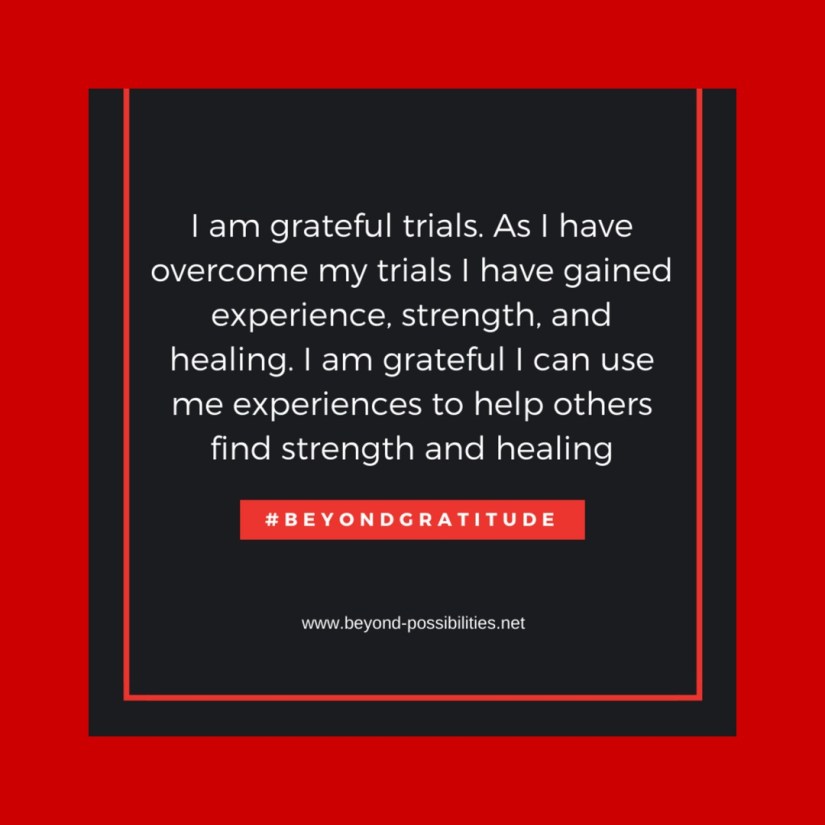
Why Gratitude Matters: The Research Story
Gratitude is more than a feel-good notion. In psychological science it’s defined as “the appreciation of what is valuable and meaningful to oneself; a general state of thankfulness and/or appreciation” (Wood, Joseph, Lloyd, & Atkins, 2009).
Here are several evidence-based benefits:
1. Mental & Emotional Wellbeing
- Gratitude correlates with greater happiness, more positive emotions, and improved life satisfaction (Harvard Health, 2021).
- A meta-analysis of 64 randomized trials found gratitude interventions led to significant improvements in mental health: fewer symptoms of anxiety (−7.8 %) and depression (−6.9 %) (Jans-Beken et al., 2022).
- Gratitude writing specifically (vs. general expressive writing) decreased stress and negative affect in a one-month follow-up (Schanche et al., 2020).
2. Physical Health & Sleep
- Gratitude is associated with better sleep quality, reduced fatigue, fewer physical symptoms, and improved cardiovascular markers (Harvard Health, 2024).
- Individuals with higher dispositional gratitude report greater vitality, less anxiety, and better self-rated physical health (Hill & Roberts, 2011).
3. Brain, Body, and Neural Pathways
- Neuroscientific work shows gratitude activates brain regions tied to reward, social bonding, and emotional regulation (Fox et al., 2015).
- Gratitude journaling helps “rewire” the brain—shifting attention toward noticing positives and strengthening social connections (The Resilience Project, 2023).
4. Relationships & Community
- Gratitude strengthens social ties. Expressing thanks signals that we’ve received value from someone else, fostering trust, connection, and prosocial behavior (Greater Good Science Center, 2016).
- The ripple extends beyond the individual; by nurturing gratitude, we also nurture environments of appreciation, kindness, and resilience.
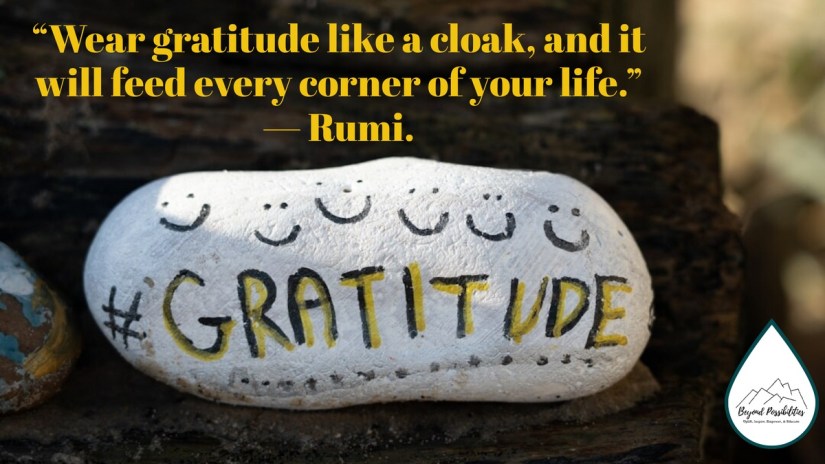
How This Matters for You — And for Us Together
As I share my daily “gratitude” posts throughout November with you, here’s what I’m inviting—and what you might discover:
- Resilience under pressure. Life brings stress, uncertainty, pain—yet research shows gratitude buffers against anxiety, depressive symptoms, and even lowers physical complaints.
- Foundational self-care. While we often think of self-care as what we do (exercise, essential oils, sleep routines), gratitude is what we become—an orientation, a noticing.
- Embodied payoff. Better sleep, less fatigue, improved mood—these aren’t extras; they’re foundational to showing up fully in your life, relationships, and purpose.
- Shared transformation. When you join the daily gratitude practice with me, we create a collective momentum—a shared shift toward noticing, naming, and appreciating the good. That communal energy amplifies the individual benefits.
How to Participate: A Simple Framework
Here’s how you can join in this year’s November gratitude journey—with flexibility built in so it fits you.
- Download your free Gratitude Journal. (below)
Begin by downloading my Beyond Possibilities Gratitude Journal, designed to guide your daily reflections and deepen your awareness of what’s good in your life. It includes space for 3–10 daily gratitude entries, inspiring prompts, and weekly reflection pages. (Download link coming soon!) - Choose your medium.
Whether it’s your downloaded journal, a digital notes app, or a social-media post—pick the format you’ll stick with. - Keep it manageable.
Research suggests that recording 3 to 10 items per day tends to produce optimal benefits (more than 10 may dilute impact).- For example: “I’m grateful today for…” followed by 3–5 things.
- You may also pick a theme of the day (health, connection, nature, small joys, acts of kindness).
- Be honest & intentional.
Gratitude doesn’t mean ignoring challenges—it means also noticing what’s good despite them. Authenticity matters more than perfection.- A suggested prompt: “What happened today that I might normally overlook—and how did it matter?”
- Another: “Who made a difference for me today—and how can I thank them?”
- Share the ripple.
Post what you’re grateful for on my daily gratitude post—either on LinkedIn or Facebook.
Join the conversation, celebrate others’ moments of gratitude, and invite friends or family to participate.
Or share on your own social media with the hashtag #BeyondGratitude to connect our growing community of thankfulness. - Reflect weekly.
At the end of each week in November, look back—What patterns emerge? What small things became big? What surprised you? This reflective pause deepens your practice and anchors your learning.
Why This Year Feels Especially Right
Given the fullness of our lives—with our personal healing journeys, essential-oil routines, emotional body work, stress-management, and self-care practices—layering in a gratitude practice is like adding a powerful support beam under the rest of the structure. It doesn’t replace anything you’re doing; it helps everything you do work better.
Plus, once gratitude becomes a habit, its benefits persist and compound over time.
In Closing
I invite you to step into November together—each day noticing something you are grateful for, sharing it if you choose, and inviting others into the circle. Let’s watch how small moments of thanks can build into greater resilience, deeper joy, stronger relationships, and more vibrant health.
With heartfelt thanks for you—for showing up, for choosing healing, for being part of this community. Here’s to a month of gratitude, connection, and transformation.
References
Emmons, R. A., & McCullough, M. E. (2003). Counting blessings versus burdens: An experimental investigation of gratitude and subjective well-being in daily life. Journal of Personality and Social Psychology, 84(2), 377–389.
Fox, G. R., Kaplan, J., Damasio, H., & Damasio, A. (2015). Neural correlates of gratitude. Frontiers in Psychology, 6(1491). https://doi.org/10.3389/fpsyg.2015.01491
Greater Good Science Center. (2016). How gratitude changes you and your brain. https://greatergood.berkeley.edu/article/item/how_gratitude_changes_you_and_your_brain
Harvard Health. (2021). Giving thanks can make you happier. https://www.health.harvard.edu/healthbeat/giving-thanks-can-make-you-happier
Harvard Health. (2024). Gratitude enhances health, brings happiness — and may even lengthen lives. https://www.health.harvard.edu/blog/gratitude-enhances-health-brings-happiness-and-may-even-lengthen-lives-202409113071
Hill, P. L., & Roberts, B. W. (2011). Examining the pathways between gratitude and self-rated physical health. Psychology & Health, 26(9), 1057–1072. https://pmc.ncbi.nlm.nih.gov/articles/PMC3489271/
Jans-Beken, L., et al. (2022). The effects of gratitude interventions: A systematic review and meta-analysis. Frontiers in Psychology. https://pmc.ncbi.nlm.nih.gov/articles/PMC10393216/
Schanche, E., et al. (2020). A brief gratitude writing intervention decreased stress and negative affect. Frontiers in Psychology. https://pmc.ncbi.nlm.nih.gov/articles/PMC8867461/
The Resilience Project. (2023). Gratitude and the benefits of journaling. https://theresilienceproject.com.au/at-home/wellbeing-hub/gratitude-and-the-benefits-of-journaling/
Wood, A. M., Joseph, S., Lloyd, J., & Atkins, S. (2009). Gratitude influences sleep through the mechanism of pre-sleep cognitions. Journal of Psychosomatic Research, 66(1), 43-48.
 Beyond Possibilities