Energy Healing, Healing Journey, Health, Self-Discovery

Movement and Emotion: The Science of Feeling Through Motion

Have you ever noticed how your body naturally moves with your emotions? You bounce when you’re happy, curl in when you’re sad, or tense your shoulders when you’re stressed. These patterns aren’t random — they reflect how the brain and body communicate through posture, physiology, and feeling. Research confirms what movement and healing traditions have long understood: movement changes emotion, and emotion changes movement.

Now, before I go too deep, you don’t have to overthink it. You can work through your emotions by simply putting on your favorite music and letting your body move to the music naturally. I also love doing AromaDance or Mindful Movement to move through my emotions.

The Somatic Basis of Emotion

Emotions aren’t only “in your head.” They’re embodied experiences involving the autonomic nervous system (ANS), muscle tone, breath, and interoception — our inner sense of how our body feels. When emotions are safely expressed through movement, the body can complete its stress cycle and return to balance. Movement therapies and somatic practices (e.g., gentle stretching, dance/movement therapy, rhythmic motion) have demonstrated reductions in cortisol, enhanced emotional regulation, and improvements in psychological well-being (Koch, Morlinghaus, & Fuchs, 2019; Wu, Li, & Zhang, 2023).
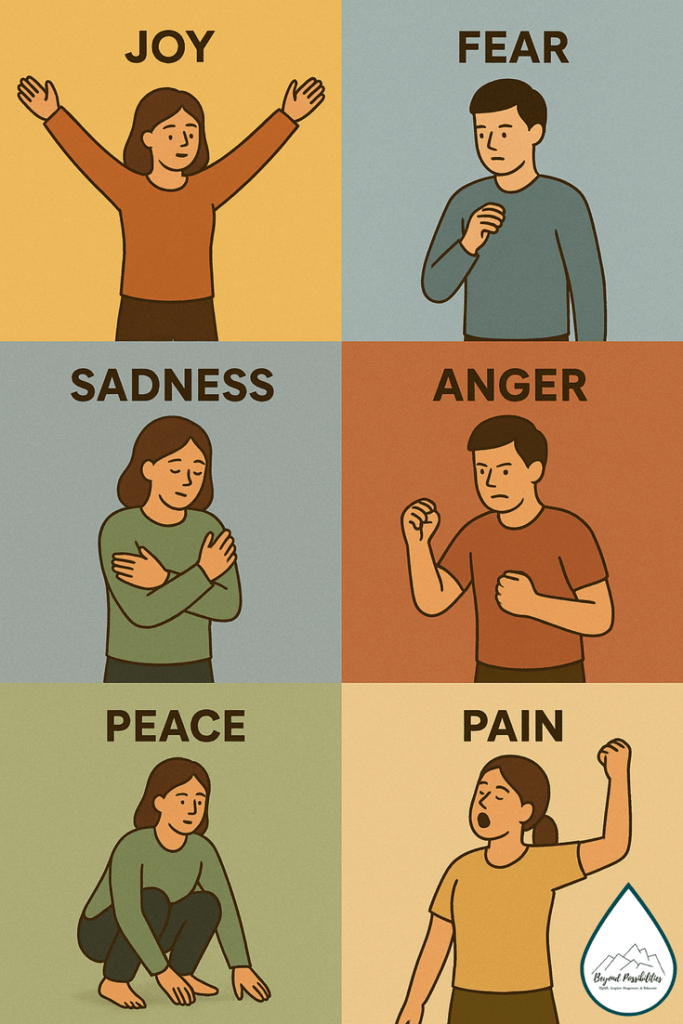


Joy: Expand, Express, Energize

Open-arm reach / chest opening
Expanding posture (arms wide, chest lifted) increases lung volume, influences the balance of sympathetic and parasympathetic tone, and signals openness and approach behavior — postures correlated with higher positive affect (e.g. expanded posture studies).

Light bounce / small hops
Gentle vertical bouncing raises endorphins and dopamine and stimulates spinal and vestibular systems for autonomic regulation.

Playful skipping / side-step
Rhythmic side-to-side locomotion with arm swing boosts mood, supports motor coordination, and taps into play systems.

Wiggle / spontaneous dance
Free, irregular movement (hips, torso, shoulders) enhances body awareness (interoception), modulates autonomic tone, and can increase positive affect (Koch et al., 2019).

Shake / tremor (gentle, spontaneous)
Small tremors or shakes help discharge stored motor tension and reduce autonomic hyperarousal, as in trauma-release (TRE) approaches.

Roll (gentle floor roll → stand)
Rolling shifts vestibular input and proprioceptive orientation, helping interrupt stuck tension patterns and inviting fluidity in the body.


Fear & Anxiety: Grounding, Soothing, Calming

Tap / hum
Gentle tapping or humming engages vagal pathways (via vibration) and supports parasympathetic activation, helping calm high arousal states.

Squeeze / hold (self-hug)
Applying gentle compression through a self-hug or forearm hold reduces cortisol and signals safety through proprioceptive feedback.

Sway / reach
Slow pendular motion with gentle arm reach soothes the vestibular system and offers predictable sensory input, helping regulate hyperarousal.


Sadness / Grief / Shame: Nurturing, Soothing, Softening

Brush / self-hug (gentle stroking)
Slow, affective touch activates C-tactile afferents associated with oxytocin release and supports calming networks.

Rock / squeeze (gentle rocking)
Rocking or gentle compressive movement engages vestibular regulatory systems, offering a soothing rhythm and containment for emotional processing.


Anger / Frustration: Safe Release, Grounding Power

Tense → release (clench / relax)
Voluntary muscle contraction followed by release modulates muscle spindle activity and helps the nervous system downregulate from tension.

Stomp / ground (foot strike)
Energetic foot strikes provide strong proprioceptive feedback and anchor excess energy into the ground, giving a sense of boundary.

Slam / push (controlled directional force)
Using controlled push or strike against a safe surface (e.g., wall, pillow) enables expression of force while reducing internal pressure and reactivity.


Peace / Calm / Confidence: Stabilizing & Centering

Ground / connect (rooted stance)
Soft squats, weight awareness in feet/ankles, and slow shifts help reestablish bodily stability and downregulate sympathetic tone.

Rest / restorative posture
Lying down with deep, diaphragmatic breathing stimulates the vagus nerve and promotes parasympathetic recovery.

Center / mindful micro-movement
Very gentle motions (neck rolls, shoulder circles) enhance interoceptive clarity and soothe the system, supporting self-regulation.


Pain / Fatigue / Recovery: Soothing, Flowing, Releasing

Settle / breathe (long exhale + micro shifts)
Slow, extended exhales paired with small posture adjustments relieve muscle guarding and support relaxation.

Ground / connect (light motion)
Gentle walking or standing awareness improves circulation and sensory grounding — beneficial for fatigue and mild pain.

Stretch / yawn / gentle mobilization
Stretching or yawning modulates muscle spindle feedback and encourages relaxation and renewed energy.


Why Somatic Movement Works

  • Interoception & emotional regulation: Improving body awareness strengthens emotion regulation capacity.
  • Rhythm & vestibular input: Repetitive movements (sway, rock, bounce) help regulate the autonomic nervous system.
  • Vocal + breath stimulation: Humming, sighing, and extended exhalation activate vagal pathways.
  • Free movement & dance: Encourages fluidity, creativity, and improved affect regulation (Koch et al., 2019; Wu et al., 2023).

Final Thoughts

Our feelings naturally manifest in the body. By intentionally choosing movement that mirrors or completes those expressions, we can help the body return to balance. Whether it’s a joyful stretch, a grounding stomp, or a slow restorative breath, each movement is a doorway to recalibration and liberation.


References

Dreisörner, A., & Junker, N. M. (2022). Self-soothing touch and being hugged reduce cortisol responses to stress: A randomized controlled trial on stress, physical touch, and social identity. Journal of Psychosomatic Research, 157, 110847. https://doi.org/10.1016/j.jpsychores.2022.110847

Eckstein, M., Kämmerer, D., Knafo, S., & Heinrichs, M. (2020). Calming effects of touch in human, animal, and robotic social interactions. Frontiers in Psychiatry, 11, Article 567. https://www.ncbi.nlm.nih.gov/pmc/articles/PMC7672023/

Koch, S. C., Morlinghaus, K., & Fuchs, T. (2019). Effects of dance/movement therapy and dance on health-related psychological outcomes: A meta-analysis. Frontiers in Psychology, 10, Article 1806. https://www.frontiersin.org/articles/10.3389/fpsyg.2019.01806/full

Lindgren, L. (2012). Emotional and physiological responses to touch massage (Doctoral dissertation, Umeå University). Umeå University Repository. https://www.diva-portal.org/smash/get/diva2%3A568111/fulltext01.pdf

Packheiser, J., et al. (2024). A systematic review and multivariate meta-analysis of touch interventions: Effects on cortisol, pain, anxiety, and more. Nature Human Behaviour. https://www.nature.com/articles/s41562-024-01841-8

Wu, J., Li, Y., & Zhang, T. (2023). Effects of dance movement interventions on psychological health in older adults: A meta-analysis and systematic review. Brain Sciences, 13(7), 981. https://www.mdpi.com/2076-3425/13/7/981

Energy Healing, Healing Journey, Making a Difference, Self-Discovery

Free to Feel, Ready to Heal: Releasing Trapped Emotions, Realigning the Body, and Renewing Belief

Have you ever felt like something deep within is holding you back—an invisible weight you can’t quite name?

You’re not alone. So many of us carry emotional baggage, imbalances, and outdated beliefs that quietly shape our thoughts, relationships, health, and confidence. The good news? You can release it. You can reset. And you can rise.

Here at Beyond Possibilities, we believe healing isn’t about pushing harder—it’s about gently peeling back the layers and finding alignment with who you were always meant to be.


What Are Trapped Emotions?

Trapped emotions are unresolved emotional energies stored in the body from past experiences—grief, fear, anger, shame—that were never fully processed. Over time, these trapped energies can lead to physical discomfort, mental distress, or even blockages in personal growth.

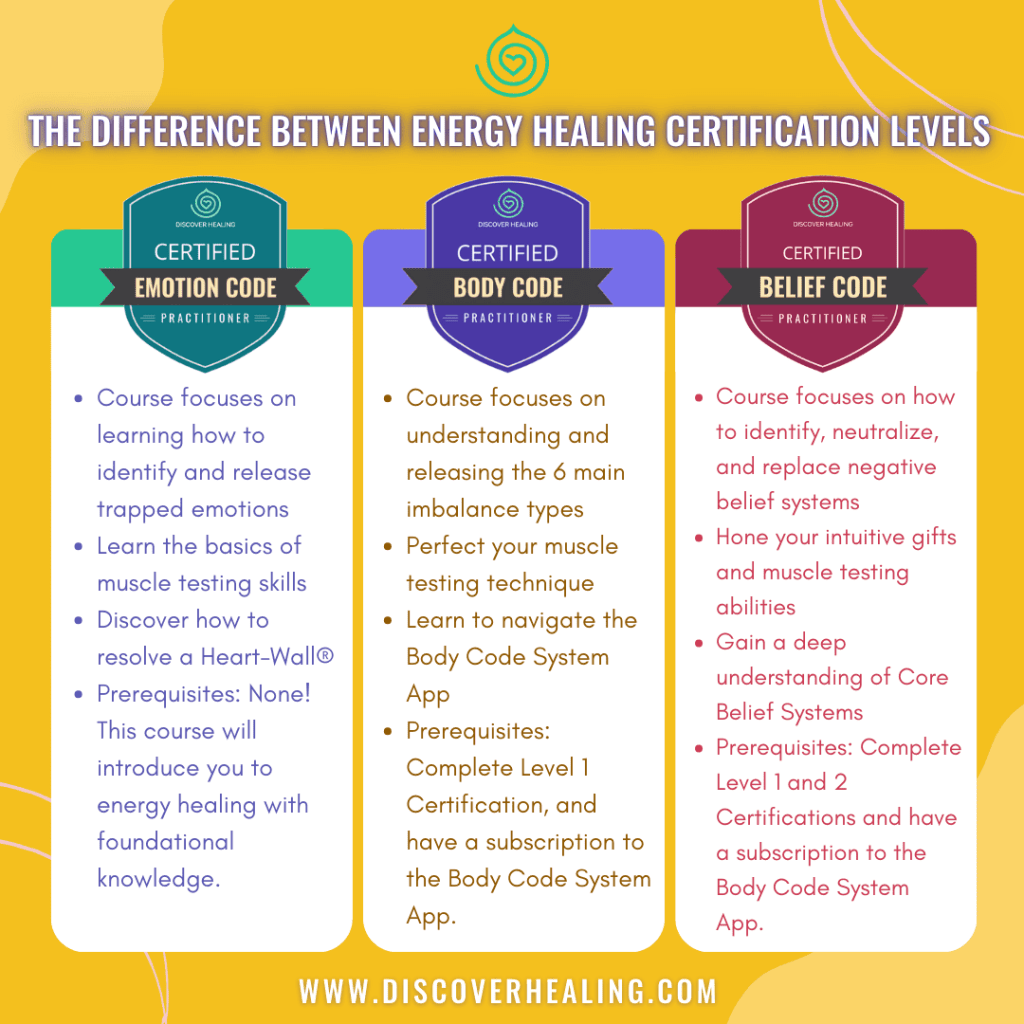
Using the Emotion Code®, a powerful yet simple method created by Dr. Bradley Nelson, we identify and release these hidden emotional energies. Through muscle testing and intention, we allow the body’s subconscious mind to guide the way, promoting emotional balance and inner peace. Many clients report feeling lighter—like they’ve finally exhaled after holding their breath for years.


Beyond Symptoms: Addressing Misalignments and Imbalances in the Body

Trapped emotions are just one piece of the puzzle. The Body Code® dives deeper into six essential areas of imbalance—energies, circuits and systems, toxins, pathogens, structural misalignments, and nutrition/lifestyle. This holistic system allows us to work with the body’s natural ability to heal itself.

Have a persistent ache that seems to defy medical explanation? Chronic fatigue that no supplement has fixed? The Body Code might uncover underlying energetic misalignments or imbalances that conventional methods overlook. These aren’t just symptoms—they’re signals. And we’re here to listen.


Rewriting the Story: Clearing Faulty and Limiting Beliefs

Your beliefs shape your reality. And many of us are living inside beliefs that were never ours to begin with—beliefs inherited from family, society, or painful experiences. These beliefs whisper lies like: I’m not good enough. I’ll never succeed. I have to struggle to be loved.

The Belief Code® offers a breakthrough process to identify and release these subconscious programs and replace them with beliefs that are empowering and true. Using a mapped system of belief types and subconscious discovery tools, we pinpoint the exact beliefs holding you back and clear them energetically—so your internal programming finally aligns with your soul’s potential.

If you’re ready to shift the story you’re telling yourself—and step into one rooted in truth, trust, and possibility—this is your invitation. Schedule a session with me and experience what it feels like to release emotional burdens, reset your energy, and realign with who you truly are. Whether you’re curious or committed, I’ll meet you where you are and walk with you every step of the way. You don’t have to carry it all anymore.


The Discovery Healing Immersion Path: A Journey of Transformation

Whether you’re navigating burnout, recovering from trauma, or simply seeking a more aligned life, the Immersion Path offers a supported, step-by-step experience in deep energetic healing. At Beyond Possibilities, we walk this path with you—through Emotion Code, Body Code, and Belief Code sessions—to clear what no longer serves and create space for what does.

This isn’t just a one-time fix; it’s a transformational journey. The Immersion Path is ideal for anyone who’s ready to commit to meaningful, lasting change—physically, emotionally, mentally, and spiritually.


Ready to Go Beyond?

If your heart is whispering there must be more, we invite you to explore a session or package through our Mentoring and Classes page. Whether you’re brand new to energy work or deeply intuitive, our goal is to guide you gently but powerfully into alignment—body, mind, and spirit.

You are not broken. You are not too much. You are not behind.

You are becoming—and we’re here to support your journey Beyond Possibilities.


✨ Let’s release, realign, and rise—together.

Energy Healing, Self-Discovery

What Do You Really Need Right Now? A Path to Rest, Regeneration, and Renewal

Life doesn’t pause. But you can.

We’re often told to “rest” when we’re overwhelmed. But rest is not one-size-fits-all—and it’s certainly not limited to a nap or a weekend off. True self-care begins when we learn how to listen: not just to the noise of the world around us, but to the whispers within.

There are many types of rest—seven, in fact. Each one speaks to a different dimension of our being: physical, emotional, mental, sensory, social, creative, and spiritual. Understanding which kind of rest you truly need is the beginning of deep self-care and regeneration.

If you’re feeling drained and unsure why—this post is for you.

Let’s explore how you can reconnect with your whole self and discover what you really need to feel nourished, restored, and alive.


7 Types of Rest: A Brief Reflection

  1. Physical Rest – Your body asks for stillness. This might mean sleep, stretching, or a walk.
  2. Emotional Rest – Your heart longs to release. Self-care, boundary-setting, and journaling help here.
  3. Mental Rest – Your mind seeks space. Take a break, play with puzzles, practice mindfulness.
  4. Sensory Rest – Your senses crave quiet. Step away from screens, be in nature, enjoy a book.
  5. Social Rest – Your soul needs connection—or solitude. Spend time with loved ones or simply be alone.
  6. Creative Rest – Your spirit yearns to express. Paint, write, explore something new.
  7. Spiritual Rest – Your inner self calls for meaning. Meditate, reflect, and reconnect.

Guided Meditation: Tuning Into Your True Needs

Find a quiet space where you won’t be disturbed. Sit or lie down comfortably. Let this be a sacred moment for yourself.


After the Meditation: Journal for Inner Discovery

Take a few moments now to write freely. Download the workbook and let these prompts guide you into deeper self-awareness.


    Beyond Rest: Toward Regeneration

    Rest is not a reward for burnout. It is your birthright.

    When you rest with awareness—when you ask your inner self what you need and respond with love—you begin to regenerate. Not just physically, but energetically, emotionally, and spiritually.

    This is the heart of self-care. Not a checklist, but a relationship—with yourself.

    So today, give yourself permission to pause. Tune in. And respond.

    There is wisdom within you. It’s been waiting patiently for your attention.


    You don’t need to do more. You need to feel more. Be more. Trust more.

    Welcome back to yourself.

    Energy Healing, Essential Oils, Healing Journey, Health, Self-Discovery

    Supporting Feelings of Anxiousness: A Mind-Body-Spirit Approach

    In a world that moves fast and demands more by the minute, it’s natural to feel off-center from time to time. The tightness in your chest, racing thoughts, or that lingering sense of unease—these are all signs that your nervous system is calling out for support. The good news? You don’t have to stay stuck in that place. There are simple, empowering ways to shift, center, and reconnect with your calm. At Beyond Possibilities, we believe in honoring the whole person—mind, body, and spirit—as we explore gentle, effective tools to support emotional wellness.


    What is Anxiousness?

    Anxiousness is the word we often use to describe feelings of nervousness, unease, or worry—especially about things that haven’t happened yet. It can show up in your body (like tension or restlessness), your thoughts (racing, looping, or worst-case scenarios), or even in your behavior (avoidance, irritability, or over-preparing). While it’s a normal response to stress, there are healthy ways to manage these emotions and ground yourself in the present.


    The 5-4-3-2-1 Grounding Technique

    One of the simplest and most effective tools for managing feelings of anxiousness is the 5-4-3-2-1 grounding technique. This sensory-based method brings you into the present moment using your five senses. It’s quick, easy, and can be used anywhere.

    Here’s how it works:

    1. See – Look around and name five things you can see. Maybe it’s the color of your socks, a picture on the wall, or sunlight through the window.
    2. Touch – Identify four things you can physically feel. The texture of your jeans, the chair beneath you, your coffee mug, or a cozy blanket.
    3. Hear – Tune in to three sounds. A ticking clock, birds outside, the gentle hum of your refrigerator.
    4. Smell – Acknowledge two scents around you. It could be a candle burning, fresh air, or a favorite essential oil.
    5. Taste – Focus on one thing you can taste. Take a sip of tea, a breath mint, or simply notice the aftertaste of your last meal.

    This practice gently shifts your attention away from anxious thoughts and helps you settle into the now. It’s grounding, calming, and supportive of emotional regulation.


    Supporting Emotions Naturally with doTERRA Essential Oils

    Sometimes, all it takes is a single breath infused with a grounding aroma to remind you—you’re safe, supported, and capable of calm. Aromatic use of doTERRA essential oils can be a beautiful and natural complement to your emotional wellness routine.

    While essential oils are not intended to treat or cure any condition, they can be used to create a calming atmosphere, promote relaxation, and support your sense of emotional balance.

    ✦ Aromatic Use for Calm and Clarity

    • Lavender – Known for its gentle, relaxing aroma. Diffuse during evening routines or when you need a moment of stillness.
    • doTERRA Balance® Grounding Blend – With its woodsy scent, this blend encourages a centered, grounded feeling—ideal for pairing with the 5-4-3-2-1 technique.
    • Adaptiv® Calming Blend – Designed to be used during stressful moments, Adaptiv’s bright yet soothing aroma is great for finding your footing again.

    ✦ Touch Support for Emotional Anchoring

    Pre-diluted and ready to roll, doTERRA’s Emotional Aromatherapy Touch Kit is perfect for quick, on-the-go emotional support:

    • Peace® (Reassuring Blend) – Roll over your heart or wrists during moments of overwhelm.
    • Cheer® (Uplifting Blend) – A boost of sunshine in a bottle, perfect when you need a lift in spirits.

    ✦ Creating Rituals for Emotional Wellness

    Incorporate oils into routines that promote intention and balance:

    • Morning intention setting with a drop of Motivate® for focus and drive.
    • Evening journaling with Frankincense for clarity and grounding.
    • Mindful breathing with Bergamot, placing a drop in your palms, inhaling deeply, and letting the calm settle in.

    Whole-Person Support with Energy Work

    At Beyond Possibilities, we also offer a variety of healing modalities designed to support emotional well-being through energy alignment:

    These tools do not diagnose or treat any condition, but they offer gentle, supportive ways to help you feel more connected, aligned, and empowered in your everyday life.


    A Spiritual Approach to Inner Calm

    Sometimes, what we need most isn’t another strategy—but a reminder that we’re not in this alone. Tuning into spiritual support can offer deep peace and reassurance, especially when emotional overwhelm feels too heavy to carry on your own.

    Whether it’s prayer, meditation, or simply pausing to breathe and invite in Divine presence, spirituality can be a powerful anchor during uncertain times.

    I invite you to watch this beautiful video:

    🎥 Pause. Breathe. Trust.

    And if you’re looking for daily spiritual encouragement, guided meditations, and intentional growth, I highly recommend exploring the Brilliant Plus App. It offers a blend of scripture, wisdom, and peace-filled prompts that can truly uplift your day.

    It’s a gentle, soulful reminder to return to your breath, lean into trust, and allow yourself to rest in something greater than yourself.

    🌟 Try it free for 5 days and see how it supports your spirit.
    Click here to begin your free trial of the Brilliant Plus App.


    You Are Not Alone

    Emotional wellness is a journey—and you don’t have to walk it alone. Whether you’re exploring essential oils for the first time, practicing grounding, or curious about energy work, we’re here to support you every step of the way.

    If you’d like to dive deeper, schedule a session, or simply chat about what might support you best, we’d love to connect.

    🌿 Visit Beyond Possibilities Mentoring and Classes to learn more about our classes, services, and personalized coaching.


    Essential Oils, Healing Journey, Health, Self-Discovery

    From Stuck to Free: Transform Your Wellness Journey with Mind-Body Practices

    Do you feel stuck? Do you feel like you keep moving your past into the present or your future? Enhancing your wellness journey can be profoundly transformative when integrated with complementary holistic practices. By weaving together methods such as meditation, movement, aromatherapy with doTERRA Essential Oils, and the Emotion Code, Body Code, and Belief Code techniques, you can cultivate a harmonious balance of mind, body, and spirit.

    1. Deepen mental clarity with Meditation
    Meditation involves focusing attention to achieve mental clarity and emotional calm. This practice can enhance energy healing by promoting relaxation and heightened self-awareness. Regular meditation has been shown to reduce stress and improve overall well-being (Black et al., 2015).

    2. Enhance Energy Flow with Movement and Dance
    Movement, whether through structured exercise, mindful stretching, or free-flowing dance, plays a vital role in energy healing. Engaging in movement helps release stagnant energy, improve circulation, and boost emotional well-being. Dance, in particular, allows for self-expression while activating the body’s natural healing rhythms. Studies show that movement-based practices like dance therapy can reduce stress, improve mood, and enhance mind-body connection (Quiroga Murcia et al., 2010).

    Pairing movement with doTERRA essential oils like Peppermint or Citrus Bliss can further invigorate the senses, promoting motivation and vitality. By incorporating intentional movement into your daily routine, you create space for emotional and energetic release, allowing for a deeper connection to your healing journey.

    3. Elevate Your Practice with Aromatherapy
    Aromatherapy utilizes essential oils to promote physical and emotional health. doTERRA Essential Oils, known for their purity, offer blends like ‘Motivate,’ which combines citrus and mint oils rich in monoterpenes, recognized for their uplifting properties (doTERRA, n.d.). Inhaling these scents can invigorate the senses and complement energy healing sessions.

    4. Release Emotional Blockages with the Emotion Code
    The Emotion Code, developed by Dr. Bradley Nelson, is a technique designed to identify and release trapped emotions that may hinder physical and emotional wellness. By addressing these emotional blockages, individuals can experience improved health and a greater sense of freedom (Nelson, 2019).

    5. Address Energetic Imbalances with the Body Code
    The Body Code is an energy healing method that aims to identify and correct imbalances within the body, encompassing areas such as energies, circuitry, toxins, pathogens, structural alignment, and nutrition. Utilizing this system can lead to enhanced well-being and support the body’s natural healing processes (Nelson, 2019).

    6. Transform Limiting Beliefs with the Belief Code
    The Belief Code focuses on identifying and shifting faulty belief systems that may contribute to emotional and physical challenges. By transforming these limiting beliefs, individuals can overcome self-sabotage and achieve personal empowerment (Nelson, 2019).

    7. Cultivate Mindfulness in Daily Activities
    Integrating mindfulness into daily tasks involves maintaining present-moment awareness, which can enhance the benefits of energy healing. Practices such as mindful breathing and conscious observation have been associated with reduced stress and improved mental health (Kabat-Zinn, 2003).

    8. Engage in Grounding Practices
    Grounding, or earthing, involves direct physical contact with the Earth’s surface electrons, promoting physiological balance. This practice has been linked to improved sleep and reduced inflammation, thereby supporting overall health (Chevalier et al., 2012).

    9. Foster Emotional Expression through Creative Arts
    Engaging in creative arts like painting, writing, or dancing allows for the expression of emotions, facilitating emotional release and healing. Creative activities have been found to enhance mood and reduce anxiety, complementing energy healing practices (Stuckey & Nobel, 2010).

    By integrating these holistic practices into your wellness journey, you can create a synergistic effect that promotes profound healing and personal growth.


    ⚠DISCLAIMER⚠ All media content created by Beyond Possibilities and the AromaVibe is intended for education purposes only. *These statements have not been evaluated by the Food and Drug Administration. This is not intended to diagnose, treat, cure, or prevent any disease.

    References
    Black, D. S., O’Reilly, G. A., Olmstead, R., Breen, E. C., & Irwin, M. R. (2015). Mindfulness meditation and improvement in sleep quality and daytime impairment among older adults with sleep disturbances: A randomized clinical trial. JAMA Internal Medicine, 175(4), 494–501. https://doi.org/10.1001/jamainternmed.2014.8081

    Chevalier, G., Sinatra, S. T., Oschman, J. L., Delany, R. M. (2012). Earthing (Grounding) the human body reduces blood viscosity—a major factor in cardiovascular disease. Journal of Alternative and Complementary Medicine, 19(2), 102–110. https://doi.org/10.1089/acm.2011.0820

    doTERRA. (n.d.). Energy and motivation. https://www.doterra.com/US/en/wellness-topics-energy-motivation

    Kabat-Zinn, J. (2003). Mindfulness-based interventions in context: Past, present, and future. Clinical Psychology: Science and Practice, 10(2), 144–156. https://doi.org/10.1093/clipsy.bpg016

    Nelson, B. (2019). The Emotion Code: How to release your trapped emotions for abundant health, love, and happiness. St. Martin’s Press.

    Quiroga Murcia, J. A., Kreutz, G., Clift, S., & Bongard, S. (2010). Shall we dance? An exploration of the perceived benefits of dancing on well-being. Arts & Health, 2(2), 149-163. https://doi.org/10.1080/17533010903488582

    Ross, A., & Thomas, S. (2010). The health benefits of yoga and exercise: A review of comparison studies. Journal of Alternative and Complementary Medicine, 16(1), 3–12. https://doi.org/10.1089/acm.2009.0044

    Stuckey, H. L., & Nobel, J. (2010). The connection between art, healing, and public health: A review of current literature. American Journal of Public Health, 100(2), 254–263. https://doi.org/10.2105/AJPH.2008.156497