Why Dating Still Matters in Marriage
Essential Oils, Family Life Education, Health, Self-Discovery

Remembering Why You Fell in Love: Rekindling the Spark and Keeping It Alive

There’s a moment every couple remembers—the season when connection felt effortless, laughter came easily, and love felt alive in every interaction. Over time, responsibilities grow, routines settle in, and that spark can feel quieter. Yet relationship science offers reassuring truth: love does not fade because it is meant to—love shifts when it is no longer intentionally nurtured.

Research consistently shows that the qualities we associate with “falling in love” are not accidents of timing. They are the result of shared experiences, emotional responsiveness, novelty, and intentional connection—all of which can be restored and strengthened, even years into marriage.

Remembering Why You Fell in Love

Early romantic love is marked by curiosity, excitement, shared discovery, and emotional closeness. The self-expansion model of close relationships explains that people feel more connected and satisfied when they engage in novel, activating activities together, expanding their sense of self through shared experiences (self-expansion as defined and supported by research on couples’ conjoint activity engagement; see Debrot et al., 2013; and affective experience sampling research by Reis et al., 2004). In other words, the very activities that helped partners connect early in their relationship—trying new things, laughing together, exploring life side by side—are foundational to ongoing connection.

As life becomes more predictable, many couples unintentionally shift from intentional connection to functional partnership. While teamwork is important, studies show that relationships thrive when couples continue to engage in shared experiences that evoke positive affect, increase activation, and promote closeness (Reis et al., 2004), rather than just daily obligation.

Remembering why you fell in love is less about revisiting the past and more about re-creating the conditions that allowed love to flourish in the first place.

Rekindling the Spark Isn’t Accidental—It’s Intentional

The idea of “keeping the spark alive” is often romanticized, but research frames it through the lens of relationship maintenance behaviors—intentional actions couples take to sustain closeness, satisfaction, and emotional connection. Expressing appreciation, offering reassurance, communicating openly, sharing affection, and spending quality time together are all forms of relational maintenance that predict long-term satisfaction and stability.

These maintenance behaviors are not just feel-good exercises; they are mechanisms through which partners communicate responsiveness and commitment, supporting emotional intimacy and mutual trust over time. Partners who engage in these behaviors tend to experience higher relationship satisfaction and emotional closeness, even amid life’s complications.

Emotional intimacy grows through responsiveness—feeling seen, heard, and valued by your partner. Structured couple-level research indicates that interventions which increase emotional availability and reduce defensive patterns correspond with improvements in intimacy and relationship satisfaction, reinforcing the idea that closeness is cultivated through compassionate interaction rather than coincidence.

Why Dating Still Matters in Marriage

Dating doesn’t end at “I do.” In fact, it becomes even more important.

Intentional couple time—often described as date nights or shared leisure activities—functions as a powerful relationship maintenance tool. When partners devote quality time to one another outside of chores, schedules, and obligations, they reinforce the friendship and emotional connection at the core of their bond. Research linking shared activities with positive relationship outcomes shows that partners who engage in exciting or activating experiences together report increased relationship satisfaction and affective connection, suggesting that these moments of shared joy and novelty contribute meaningfully to ongoing relational quality.

Dating doesn’t have to be elaborate or expensive. What matters most is intentional presence—choosing one another again and again, even in the midst of life’s demands.

Gratitude Over Attitude: A Foundation for Connection

In the midst of busy schedules and daily stressors, it can be easy to let frustration speak louder than appreciation. Yet gratitude is one of the most powerful relational resets available. Longitudinal research shows that gratitude motivates reciprocal maintenance behaviors: feeling appreciated by a partner increases one’s responsiveness to a partner’s needs, which in turn nourishes relationship stability and satisfaction over time (Algoe et al., 2010; overall evidence on gratitude and relationship maintenance).

Feeling genuinely appreciated also buffers couples against negative communication patterns and stress, protecting relationship quality even when conflict arises. Simply put, when partners consistently express and perceive gratitude, they are more likely to maintain behaviors that support intimacy and interdependence.

Keeping the Spark Alive: A Gentle Reframe

From a scientific perspective, love is not something we lose—it’s something we stop feeding. When couples prioritize shared joy, emotional safety, appreciation, and meaningful connection, satisfaction and intimacy grow. Rekindling the spark doesn’t mean going backward—it means moving forward together with awareness and choice.

At Beyond Possibilities, we believe relationships thrive when they are tended with compassion, curiosity, and intention.

Love is not a moment.
It is a practice.
And it is always within reach.

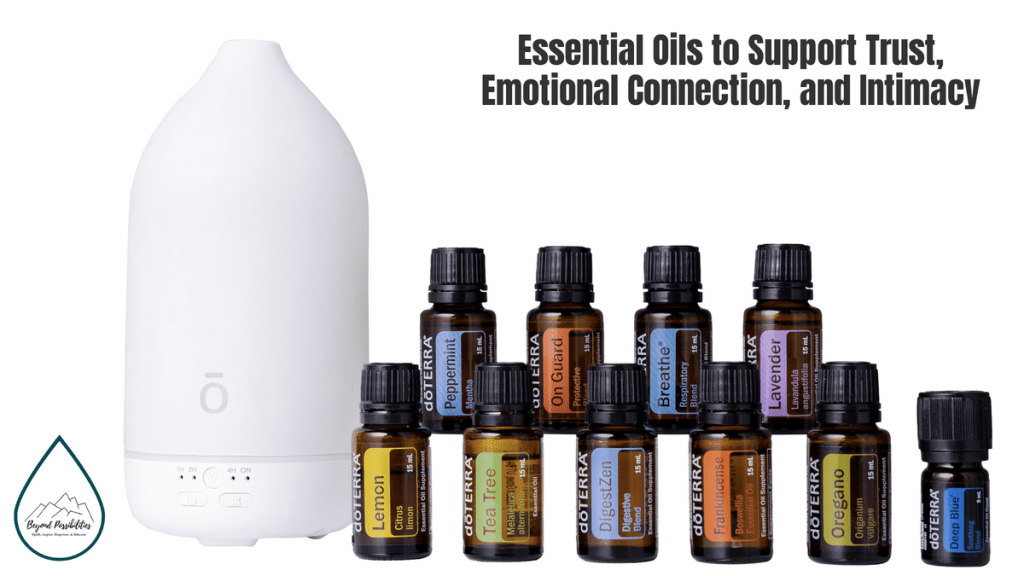
Essential Oils to Support Trust, Emotional Connection, and Intimacy*

Healthy relationships are not built on chemistry alone—they are cultivated through emotional safety, trust, and intentional presence. When the nervous system feels calm and supported, it becomes easier to connect, communicate, and experience closeness on a deeper level.

Aromatherapy has been widely explored for its influence on mood, emotional regulation, and stress response. These factors directly affect how we show up in our relationships—especially during moments of vulnerability, conflict, or emotional fatigue. While essential oils are not a replacement for communication or relational work, they can serve as supportive tools that help create an environment where connection feels safer and more accessible.

When used aromatically, doTERRA® pure tested grade essential oils can become part of shared rituals—such as evening wind-down routines, intentional conversations, or date nights—helping shift the body and mind into a more receptive, present state.

Supporting Trust & Emotional Safety

Trust begins when the body feels safe. Oils that promote calm, grounding, and emotional regulation can support a sense of stability and reassurance—especially for those navigating stress, past experiences, or emotional walls.

Lavender

Lavender is one of the most researched essential oils for relaxation and emotional calm. Aromatically, it is commonly used to support restfulness and soothe heightened emotional states. When tension softens, conversations often feel less reactive and more open.

Best used: Diffused during quiet evenings, before meaningful conversations, or as part of a bedtime ritual.

doTERRA Balance® Grounding Blend

Balance® combines grounding woods and resins traditionally associated with stability and emotional centering. Aromatic use may support feelings of calm and equilibrium, which can help partners feel more emotionally anchored during moments of uncertainty or stress.

Best used: Diffused before difficult discussions or applied aromatically during moments when emotional regulation is needed.

Frankincense

Often associated with mindfulness and reflection, Frankincense is used aromatically to promote a sense of peace and emotional awareness. It can support intentional presence—helping individuals slow down and truly listen.

Best used: During intentional connection time, prayer, meditation, or reflective conversations.

Birch

Birch is traditionally associated with renewal, resilience, and emotional release. Aromatically, it is often used to support letting go of emotional burdens, rigidity, or lingering stress that can create emotional distance in relationships. Birch may be especially supportive when trust has been strained and the body is holding onto protective tension.

By encouraging emotional flexibility and a sense of internal reset, Birch can help create space for forgiveness, rebuilding trust, and moving forward together.

Best used:
Diffused during moments of emotional repair, after difficult conversations, or when working through lingering emotional weight from past experiences.

Supporting Emotional Connection

Emotional connection grows when individuals feel emotionally open, seen, and understood. Oils that uplift mood and encourage emotional expression may help soften emotional distance and promote warmth.

Bergamot

Bergamot is known for its bright, citrus aroma with calming undertones. Aromatically, it is often used to promote emotional balance and reduce feelings of overwhelm, creating space for lighter, more open interaction.

Best used: Diffused during shared activities or casual connection time to support a relaxed, positive atmosphere.

Wild Orange

Wild Orange is uplifting and energizing, commonly used to promote positive mood and emotional optimism. It can help shift heavy emotional states into a more playful, connected energy.

Best used: During daytime connection, shared laughter, or when emotional heaviness feels present.

Rose

Rose is often associated with compassion, emotional openness, and nurturing connection. Aromatically, it may support feelings of love, tenderness, and emotional closeness—particularly when vulnerability feels challenging.

Best used: During intentional connection rituals or moments of emotional sharing.

Supporting Intimacy & Closeness

Intimacy thrives when stress is reduced and emotional presence is increased. Oils that promote relaxation, sensual awareness, and emotional softness can help couples reconnect in meaningful ways.

Ylang Ylang

Ylang Ylang is traditionally used to support relaxation and emotional balance. Aromatically, it may help release tension and encourage a sense of ease and openness, supporting both emotional and physical closeness.

Best used: Diffused during date nights, evening wind-down routines, or intentional intimacy time.

Sandalwood

Sandalwood is grounding and calming, often associated with emotional depth and mindfulness. Aromatic use can support presence and emotional awareness, helping partners feel more connected and engaged.

Best used: During slow, intentional moments of connection or relaxation.

Creating Intentional Connection Rituals

The power of essential oils in relationships is not about the scent alone—it is about intention and presence. When oils are used intentionally, they become cues for pause, mindfulness, and emotional availability.

Simple rituals might include:

  • Diffusing a chosen oil during weekly check-ins
  • Using a calming blend before important conversations
  • Creating a shared evening routine to unwind together
  • Pairing aromatherapy with breathwork, prayer, or reflection

These moments reinforce emotional safety and trust by signaling to the nervous system that it is safe to slow down and connect.


*The information provided is for educational purposes only. doTERRA essential oils are not intended to diagnose, treat, cure, or prevent any disease. Individual experiences may vary.


References (APA 7)

Algoe, S. B., Gable, S. L., & Maisel, N. C. (2010). It’s the little things: Everyday gratitude as a booster shot for romantic relationships. Personal Relationships, 17(2), 217–233. https://doi.org/10.1111/j.1475-6811.2010.01233.x

Debrot, A., Schoebi, D., Perrez, M., & Horn, A. B. (2013). Self-expansion and flow in couples’ momentary experiences: An experience sampling study. Journal of Personality and Social Psychology. https://pubmed.ncbi.nlm.nih.gov/18729702

Algoe, S. B., & Fredrickson, B. L. (2013). The social functions of the emotion of gratitude via expression. Emotion, 13(4), 605–609. (Referenced within relational gratitude literature)

(To strengthen your post, you may add further specific citations on relationship maintenance behaviors and emotional intimacy from your own library or other peer-reviewed sources.)

How Dance Moves Emotions: The Science Behind Movement
Essential Oils, Health, Self-Discovery

How Dance Moves Emotions: The Science Behind Movement

Music begins. The body responds. Before words form, emotion is already in motion.

Dance has long been a language of the heart—used across cultures to express joy, grief, celebration, and release. Today, science confirms what many have felt intuitively: when we move rhythmically, we don’t just exercise the body—we process emotion, regulate stress, and reconnect with ourselves.

A growing body of science shows that participating in dance can improve mood, reduce anxiety and depression, and enhance emotional regulation across ages and settings. A growing body of science shows that participating in dance can improve mood, reduce anxiety and depression, and enhance emotional regulation across ages and settings.

What Science Says About Dance and Emotional Well‑Being

Dance Improves Mood and Reduces Anxiety and Depression

Scientific reviews of dance interventions report significant reductions in symptoms of depression, anxiety, and stress compared with no‑dance control conditions. Across multiple dance styles—from tango to Latin dance—participants consistently show improvements in mood and overall mental health (Koch, 2023).

Meta‑analytic findings further indicate that dance is equally or more effective than other forms of physical activity for improving quality of life and reducing anxiety and depressive symptoms. These outcomes are thought to be driven by dance’s unique blend of rhythmic movement, creative expression, and social engagement (Mann et al., 2023).

Among older adults, dance interventions have also been shown to improve mental health indicators, including depressive symptoms and neuropsychiatric outcomes, highlighting dance as a valuable, accessible approach across the lifespan (Taber et al., 2023).

Dance Supports Emotional Regulation

Dance Movement Therapy (DMT)—a structured, clinical application of movement—has been examined for its role in emotional regulation. Scientific reviews indicate that DMT supports emotional integration, expression, and regulation by engaging the body as a pathway to emotional processing (Smith & Jones, 2024).

Dance Enhances Social Connection and Positive Emotion

Science also demonstrates that dance supports social bonding and positive affect. Group dance participation has been associated with increased social connection and emotional well‑being when compared with other creative activities, suggesting that shared movement amplifies emotional resilience (Lee et al., 2025).

Key Findings from the Science

  • Improved mood and reduced depressive symptoms following dance participation (Koch, 2023; Mann et al., 2023)
  • Decreased anxiety and stress across diverse populations (Koch, 2023; Taber et al., 2023)
  • Enhanced emotional regulation and expression through embodied movement (Smith & Jones, 2024)
  • Increased social connection and positive emotional states (Lee et al., 2025)

How Dance Influences Emotions

1. Movement and Emotion Are Neurologically Linked

Dance combines aerobic activity with expressive movement, activating neurochemical pathways associated with improved mood while allowing emotions to be physically expressed and processed (Koch, 2023).

2. Embodied Awareness Supports Emotional Regulation

By engaging rhythm, coordination, and body awareness, dance naturally recruits attention and executive functioning. This embodied focus supports greater emotional control and integration, as observed in therapeutic movement settings (Smith & Jones, 2024).

3. Connection Through Movement Enhances Emotional Health

Dancing with others introduces social interaction that amplifies positive affect and reduces isolation—an important contributor to emotional well‑being (Lee et al., 2025).

How to Use Dance and Aroma Together: A Simple Practice

Whether dancing alone at home or in a group setting, pairing intentional movement with aromatic support can deepen emotional awareness and release.

A simple practice:

  1. Choose music that matches your emotional intention (uplifting, grounding, expressive, calming).
  2. Add a diffuser blend that complements that intention.
  3. Begin with gentle movement, allowing your body to respond naturally to the rhythm.
  4. Focus on breath and sensation rather than choreography.
  5. Close with stillness, noticing emotional shifts.

This approach works well for personal self-care, group classes, or emotional wellness sessions.

doTERRA Diffuser Blends to Support Emotional Experience While Dancing

Aromatherapy can support emotional states that complement the benefits of dance. The following doTERRA diffuser blends are designed to enhance mood, focus, grounding, and connection while dancing. Use essential oils according to safety guidelines.

Joyful Motion Blend

  • 3 drops Citrus Bliss®
  • 2 drops Lavender
  • 2 drops Bergamot

Supports uplifting energy and emotional lightness.

Flow State Dance Blend

  • 3 drops Wild Orange
  • 2 drops Peppermint
  • 1 drop Ylang Ylang

Encourages focus, rhythm, and creative flow.

Grounded Expression Blend

  • 3 drops Frankincense
  • 2 drops Balance®
  • 1 drop Vetiver

Promotes grounding and body‑mind connection.

Calm Release Blend

  • 3 drops Serenity®
  • 2 drops Roman Chamomile
  • 1 drop Lavender

Supports stress reduction and emotional release.

Connect and Socialize Blend

  • 3 drops Bergamot
  • 2 drops Wild Orange
  • 2 drops Birch

Encourages positive social energy and shared joy.

Closing Thoughts

Science continues to affirm what many feel intuitively: dance is a powerful emotional tool. By integrating physical movement, creative expression, and social connection, dance supports emotional health in ways that extend far beyond exercise. When paired with intentional aromatherapy using doTERRA essential oils, dance becomes a holistic, heart‑centered practice for emotional well‑being.

If this topic resonates with you and you’d like to explore movement and emotions more deeply, I invite you to continue the journey through other blogs here on Beyond Possibilities. You’ll find additional reflections and practices on mindful movement, AromaDance, and how emotions live and release through the body. Each piece builds on the understanding that when we move with intention, we create space for healing, clarity, and connection—one breath and one movement at a time.

Previous Resources on Movement, Emotion & Expressive Practices

AromaDance
A deep look at AromaDance as a modality that combines essential oils with expressive movement to release stress, encourage creative flow, and open emotional expression through movement.
Read it here: https://beyond-possibilities.net/mentoring-and-classes/aromadance/

Movement and Emotion: The Science of Feeling Through Motion
A thoughtful exploration of how emotions are embodied, how movement (including dance) affects the autonomic nervous system, and practical movement techniques to support emotional regulation and resiliency.
Read it here: https://beyond-possibilities.net/2025/10/17/movement-and-emotion-the-science-of-feeling-through-motion/

From Stuck to Free: Transform Your Wellness Journey with Mind-Body Practices
A holistic wellness post that includes how movement and dance release stagnant energy, improve mind-body connection, and support emotional well-being alongside meditation, aromatherapy, and energy healing.
Read it here: https://beyond-possibilities.net/2025/03/05/from-stuck-to-free-transform-your-wellness-journey-with-mind-body-practices/

Music, Movement, and Mood – Just Dance (linked within Mindful Movement Classes page)
A resource referenced on the Mindful Movement Classes page, offering an introduction to how music and spontaneous dance can uplift mood and release emotion. (Note: this is linked from the class description rather than a standalone blog post.)
Explore Mindful Movement Classes here: https://beyond-possibilities.net/mentoring-and-classes/mindful-movement-classes/

FDA Compliance Note

The information shared in this article is intended for educational purposes only. Essential oils are not intended to diagnose, treat, cure, or prevent any disease. Individual responses to aromatherapy may vary. Always follow manufacturer safety guidelines when using essential oils, especially around children, pets, or individuals with sensitivities.

References (APA 7)

Koch, S. (2023). Evidence of the effects of dance interventions on adults’ mental health: A systematic review. Frontiers in Psychology, 14, 1180566. https://pubmed.ncbi.nlm.nih.gov/37287281/

Mann, L., et al. (2023). The effectiveness of dance interventions on psychological and cognitive health outcomes compared with other physical activity. Arts & Health. https://pubmed.ncbi.nlm.nih.gov/38270792/

Taber, A., et al. (2023). Effects of dance therapy on cognitive and mental health in adults aged 55+ with mild cognitive impairment: A systematic review and meta‑analysis. BMC Geriatrics, 23, 553. https://bmcgeriatr.biomedcentral.com/articles/10.1186/s12877-023-04406-y

Smith, J., & Jones, R. (2024). The role of dance movement therapy in enhancing emotional regulation: A literature review. The Arts in Psychotherapy. https://pubmed.ncbi.nlm.nih.gov/39170197/

Lee, H., et al. (2025). The impact of performing arts on mental health, social connection, and creativity in university students: A randomized controlled trial. BMC Public Health, 25, 312. https://bmcpublichealth.biomedcentral.com/articles/10.1186/s12889-025-22552-3

Essential Oils, Health

Essential Oils to Support Emotions During Life Changes

Life transitions—whether welcomed or unexpected—have a way of stirring our emotions at a deep level. New seasons can bring excitement and hope, but they can also uncover feelings of fear, grief, uncertainty, or fatigue. During these moments, caring for our emotional well-being is not a luxury—it’s a necessity. Essential oils can serve as gentle, supportive tools to help calm the nervous system, ground emotions, and encourage resilience as we move through change with intention and self-compassion.

Below is a holistic, research-informed guide to essential oils that may help support emotional balance during times of transition.*


🌱 Grounding & Stability

For feeling unsteady, anxious, or overwhelmed

When life feels uncertain, grounding oils can help create a sense of safety and emotional steadiness.

  • Frankincense – Encourages calm breathing, clarity, and emotional grounding
  • Vetiver – Deeply grounding; helpful for restlessness and emotional exhaustion
  • Cedarwood – Promotes feelings of security, strength, and support
  • Patchouli – Anchoring and stabilizing during major identity or lifestyle shifts

How to use:
Diffuse 3–4 drops during quiet reflection, journaling, or prayer. Can also be applied (properly diluted) to the bottoms of the feet.


🌊 Emotional Release & Letting Go

For grief, sadness, or processing the past

Change often requires release. These oils support emotional expression and gentle comfort.

  • Lavender – Calms the nervous system and soothes emotional tension
  • Roman Chamomile – Comforting during grief, irritability, or overwhelm
  • Ylang Ylang – Encourages emotional release and heart openness
  • Bergamot – Supports emotional processing while lifting mood

How to use:
Apply diluted oil over the heart, wrists, or back of the neck during moments of heaviness.


🌸 Courage, Confidence & Forward Movement

For fear of the unknown or stepping into something new

These oils can help build inner strength and emotional resilience.

  • Ginger – Encourages courage and forward momentum
  • Black Pepper – Empowering and energizing during hesitation
  • Cardamom – Supports emotional strength and confidence
  • Cypress – Helpful for transitions and moving through change

How to use:
Diffuse in the morning or inhale from cupped hands before taking the next step forward.


☀️ Hope, Joy & Emotional Uplift

For discouragement, low mood, or lack of motivation

Uplifting oils can help restore optimism and lightness during challenging seasons.

  • Sweet Orange – Encourages joy and emotional warmth
  • Lemon – Clarifying, refreshing, and mentally uplifting
  • Grapefruit – Supports optimism and self-worth
  • Neroli – Comforting and hopeful, especially after loss or emotional trauma

How to use:
Diffuse mid-day or use in a personal inhaler for emotional refreshment.


🌿 Self-Compassion & Inner Peace

For burnout, self-criticism, or emotional fatigue

Change often calls us to slow down and nurture ourselves.

  • Rose – Deeply nurturing and heart-centered
  • Geranium – Balances emotions and supports self-acceptance
  • Clary Sage – Encourages emotional balance and trust
  • Sandalwood – Promotes inner peace and emotional grounding

How to use:
Diffuse during meditation, prayer, or evening wind-down routines.


🧴 Simple Diffuser Blend for Life Transitions

Grounded Hope Blend

  • 2 drops Frankincense
  • 2 drops Bergamot
  • 1 drop Cedarwood

This blend supports grounding, emotional clarity, and gentle optimism during times of change.


Final Thoughts

Life transitions invite growth, even when they feel uncomfortable. While essential oils are not a cure-all, they can be meaningful companions—offering moments of calm, clarity, and encouragement as you navigate change. Listen to your body, honor your emotions, and give yourself permission to move through each season at your own pace.


*These statements have not been evaluated by the Food and Drug Administration. Essential oils are not intended to diagnose, treat, cure, or prevent any disease. Always consult a qualified healthcare professional for medical or mental health concerns.

Essential Oils, Family Life Education, Self-Discovery

Why Resolutions Don’t Work — And What Actually Does

Every year, resolutions promise transformation. Eat better. Move more. Be more disciplined. And every year, many of those promises quietly dissolve, often replaced with guilt, frustration, and the belief that something is wrong with you.

But science tells a different story.

Resolutions don’t fail because people lack motivation or willpower. They fail because they are built on systems that ignore how the human body, brain, and nervous system actually create lasting change.

This is your permission slip to stop forcing yourself into frameworks that were never designed for your body, your strengths, or your life — and instead choose approaches that honor how change truly works.


The Resolution Myth

Traditional resolutions rely on rigid goals, arbitrary start dates, and outcome-focused expectations. While the idea of a “fresh start” can temporarily boost motivation, research shows that temporal landmarks alone do not sustain long-term behavior change without supportive structures embedded into daily life (Kooij et al., 2015).

Many resolutions are also vague (“be healthier”) or overly ambitious, leaving no clear path for action. When setbacks occur — as they inevitably do — people often interpret them as personal failure rather than part of the learning process. This mindset increases stress and disengagement, making consistency less likely.


Why Willpower Isn’t the Answer

Sustainable change is not a function of force. It is a function of conditions.

Behavioral science consistently shows that habits stick when they are:

  • Small and repeatable
  • Anchored to existing routines
  • Supported by emotional regulation and internal motivation

When stress levels are high, the brain prioritizes survival over growth. Under these conditions, willpower is unreliable. This is why systems rooted in guilt and pressure tend to collapse — they activate stress responses rather than support learning and adaptation.


Mindset, Self-Talk, and the Body: What the Science Shows

Research in mind-body medicine demonstrates that cognitive and emotional states meaningfully influence the physiological environments in which healing and change occur. Harvard Health Publishing has documented that the brain and immune system communicate bidirectionally, meaning thoughts, emotions, and stress perception can influence immune signaling, inflammation, and recovery processes (Harvard Health Publishing, n.d.).

Expanding on this connection, Harvard psychologist Ellen Langer’s work on mindfulness and perception has shown that psychological framing can measurably affect physical outcomes. In controlled research, altered perceptions of time significantly influenced the rate of physical healing, including bruise recovery, underscoring the role of awareness and expectation in bodily processes (Aungle & Langer, 2023).

Further supporting this, contemporary reviews of self-talk research demonstrate that intentional internal dialogue improves emotional regulation, stress resilience, and behavioral consistency — all factors that indirectly but powerfully support physical wellbeing by shaping nervous system responses and health-related behaviors (Brinthaupt & Morin, 2023).

Taken together, this evidence reframes change entirely: sustainable transformation does not emerge from self-criticism or force, but from cultivating internal conditions — safety, supportive self-talk, and reduced stress — that allow the body to function as designed.


Foundational Wellness Over Forced Change

Rather than resolutions that demand perfection, research supports foundational practices that build resilience and capacity over time:

  • Consistent sleep and recovery
  • Nourishment that stabilizes energy and mood
  • Gentle, repeatable movement
  • Emotional regulation and stress support

When these foundations are in place, behavior change becomes less about discipline and more about momentum.


Movement That Feels Good Actually Lasts

Movement is often positioned as punishment for not being “enough.” Science tells a different story.

Positive emotional responses to movement are among the strongest predictors of long-term adherence. Meta-analytic research shows that when physical activity is experienced as enjoyable rather than aversive, individuals are significantly more likely to sustain it over time (Rhodes et al., 2021). Moderate, self-selected activities — such as walking, gentle strength training, or mindful movement — consistently produce more positive affect than high-intensity approaches that may feel overwhelming, particularly early on.

Additionally, environments that support autonomy, competence, and connection further enhance intrinsic motivation and enjoyment, reinforcing consistency without relying on pressure or obligation (Boiché & Sarrazin, 2013).

Simply put: consistency grows from enjoyment, not punishment.

Find music that inspires you.

Body Groove just release a Manifesting Magic Through Movement that is beautiful. (I am not an affiliate, but a huge fan of their playlists.)


Supportive Tools for Sustainable Change: Essential Oils and Supportive Research

While behavior change is primarily psychological and neurological, supportive tools can meaningfully improve the internal and external environments in which habits grow. When stress is reduced and emotional regulation is supported, the body is better positioned to sustain consistent, health-supportive behaviors. Within this context, aromatherapy and essential oils have been studied for their effects on stress perception, mood regulation, sleep quality, and nervous system balance.

Stress, Mood, and Sleep Support

Randomized controlled trials have demonstrated that inhalation of specific essential oil blends can significantly reduce perceived stress and improve sleep quality — two foundational elements for recovery, emotional regulation, and sustainable behavior change. Improved sleep and reduced stress are strongly associated with better adherence to wellness routines, improved mood stability, and enhanced capacity for habit formation (Kim et al., 2017; Lee et al., 2021). These findings support the use of aromatherapy as a complementary practice to help lower physiological stress load and support restorative processes essential for long-term change.

Nervous System Effects

Scoping reviews of essential oil research indicate measurable effects on emotional modulation, anxiety reduction, stress regulation, sleep quality, and mental fatigue. These effects are believed to occur primarily through olfactory and respiratory pathways that influence limbic system activity and neurochemical signaling involved in emotional and autonomic regulation (de Rapper et al., 2023). By supporting nervous system balance, aromatherapy may reduce friction around daily wellness behaviors and improve consistency without relying on force or willpower.

AromaTouch® Technique Research

Pilot trials examining structured essential oil application procedures, such as the AromaTouch® Technique, have demonstrated enhanced relaxation responses and reductions in biomarkers associated with stress and inflammation when compared to control touch procedures (Bennett et al., 2017). These findings suggest that intentional, rhythmic application of essential oils combined with touch may further support parasympathetic activation, contributing to improved recovery and emotional regulation.

Importantly, evidence consistently supports essential oils as supportive tools, not drivers, of personal transformation. They assist the environment of change — reducing stress, supporting emotional balance, and improving recovery — rather than acting as the cause of behavioral or psychological change. When used alongside aligned mindset work, movement that feels good, and foundational wellness practices, essential oils can help make sustainable change feel more accessible and embodied.


A New Way Forward

This is not about lowering standards. It is about raising self-respect.

When you stop forcing yourself into systems that rely on guilt and willpower, and instead build change around how your body and brain actually work, something shifts.

Change becomes kinder.
More realistic.
And far more sustainable.


References (APA 7)

AromaTouch® technique trial:
Author(s). (Year). Immediate and lasting effects of the dōTERRA AromaTouch Technique on autonomic function and biomarkers: A pilot trial. Journal of Integrative Medicine and Therapy. avensonline.org

Aungle, P., & Langer, E. J. (2023). Physical healing as a function of perceived time. Scientific Reports, 13, Article 18454. https://doi.org/10.1038/s41598-023-45393-2

Behavior change and motivation theory:
Alberts, L., Lyngs, U., & Lukoff, K. (2024). Designing for sustained motivation: A review of Self-Determination Theory in behaviour change technologies. arXiv. arXiv

Boiché, J., & Sarrazin, P. (2013). Peers’ influence on exercise enjoyment: A self-determination theory approach. Psychology of Sport and Exercise, 14(4), 461–468. https://pubmed.ncbi.nlm.nih.gov/24150130/

Brinthaupt, T. M., & Morin, A. (2023). Self-talk: Research challenges and opportunities. Frontiers in Psychology, 14, 1210960. https://doi.org/10.3389/fpsyg.2023.1210960

Essential oil nervous system effects scoping review:
de Rapper, S., et al. (Year). The effects of essential oils on the nervous system: A scoping review. PubMed summary. PubMed

Harvard Health Publishing. (n.d.). Can our brain talk to our immune system? Harvard Medical School. https://www.health.harvard.edu/mind-and-mood/can-our-brain-talk-to-our-immune-system

Kooij, A., et al. (2015). Temporal landmarks and aspirational behavior. Management Science, 61(11), 2695–2714.

Lee, J. A., et al. (2021). Effect of aromatherapy on sleep quality of adults and elderly people: A systematic literature review and meta-analysis. Complementary Therapies in Medicine, 60, 102739. https://doi.org/10.1016/j.ctim.2021.102739

Resolution success longitudinal data:
University research summary. (2025). New Year’s resolution adherence statistics. UNSW Newsroom. UNSW Sites

Rhodes, R. E., et al. (2021). Affective and enjoyment responses to physical activity: A meta-analysis. Health Psychology Review, 15(2), 167–186. https://pubmed.ncbi.nlm.nih.gov/34112041/

Studies on inhalation aromatherapy effects on stress, sleep quality, and mood:
Kim, H. J., et al. (2017). The effects of aromatherapy essential oil inhalation on stress, sleep quality, and depression in healthy adults. European Journal of Integrative Medicine, 12, 79–86. ScienceDirect

Xu, J., et al. (2025). The effects of Rosa damascena aromatherapy on anxiety, stress, hemodynamics, and sleep: A systematic review and meta-analysis. Frontiers in Public Health. https://pubmed.ncbi.nlm.nih.gov/41262694/

Modern Healing With Ancient Oils
Essential Oils

Modern Healing With Ancient Oils: Bringing the Oils of the Bible Into Daily Life

How doTERRA essential oils help us nurture mind, body & spirit today

There is something sacred about opening a bottle of oil and feeling instantly connected — not just to nature, but to the very same plants God wove into Scripture thousands of years ago.

These oils aren’t only relics of the past.
They’re part of God’s original design for wellness, and today, with doTERRA’s purity and potency, we get to bring them into our homes, routines, and healing practices in ways that feel deeply supportive and beautifully aligned with modern life.

Below is your guide to the Oils of the Bible with their Scriptural roots and their modern wellness benefits — a perfect companion to your original blog.


🌿 SANDALWOOD (Aloes)

Scriptures: Numbers 24:6; Psalm 45:8; Proverbs 7:17; Song of Solomon 4:14; John 19:39

A deeply grounding, calming oil — just as meaningful today as it was in ancient worship rituals.

Modern uses:
• Enhances meditation, prayer, and mindfulness
• Smooths fine lines and supports mature or dry skin
• Promotes deep, restorative sleep
• Calms a racing mind
• Lovely in personal fragrance blends


🌿 CASSIA

Scriptures: Exodus 30:24; Ezekiel 27:19; Psalm 45:8

Warm, spicy, and comforting — Cassia brings courage, confidence, and a sense of emotional strength.

Modern uses:
• Supports healthy metabolic function
• Uplifts mood and emotional warmth
• Wonderful for non-toxic home cleaning sprays
• Adds warmth to diffuser blends
• Supports digestion and overall wellness


🌿 CEDARWOOD

Scriptures: Leviticus 14; Numbers 19

Symbolic of protection and stability — Cedarwood feels like an instant grounding embrace.

Modern uses:
• Deep relaxation and bedtime support
• Helps quiet mental chatter
• Encourages emotional safety and groundedness
• Supports healthy hair and scalp
• Natural insect-repelling aroma


🌿 CYPRESS

Scriptures: Genesis 6:14; Isaiah 41:19; 44:14; 1 Kings 9:11; Song of Solomon 1:17

Cypress embodies movement, flow, and renewal — a beautiful companion for both physical and emotional transitions.

Modern uses:
• Supports healthy circulation
• Helps with leg fatigue or heaviness
• Encourages emotional release
• Supports lymphatic flow
• Lovely for breathwork and grounding practices


🌿 FRANKINCENSE

Scriptures: Multiple references throughout OT & NT; Matthew 2:11

Often called the “king of oils,” Frankincense remains one of the most versatile wellness tools available today.

Modern uses:
• Supports healthy cellular function
• Calms anxious feelings and overthinking
• Enhances meditation, prayer, and focus
• Nourishes and brightens skin
• Encourages emotional balance
• Supports immunity and overall wellness


🌿 MYRRH

Scriptures: Genesis 37:25; Esther 2:12; Song of Solomon; Matthew 2:11; John 19:39

An oil of comfort, grounding, and emotional steadiness — especially helpful in times of stress or transition.

Modern uses:
• Deep hydration for dry or irritated skin
• Supports healthy gums and oral care
• Calms emotional overwhelm
• Supports postpartum recovery and feminine wellness
• Centers the heart for prayer or journaling


🌿 SPIKENARD (NARD)

Scriptures: Song of Solomon; Matthew 26; Mark 14; John 12

A deeply soothing, earthy oil known for encouraging rest — emotionally and physically.

Modern uses:
• Supports relaxation and emotional release
• Promotes deeper rest and nighttime unwinding
• Calms the nervous system
• Gentle for skincare when blended properly
• Supports quiet reflection and peace


🌿 LAVENDER

(Possibly the “nard” mentioned in Scripture)

Scriptural references are debated, but many scholars connect Lavender to the traditions surrounding anointing and purification.

Modern uses:
• Calms anxious thoughts
• Supports peaceful sleep
• Soothes skin irritations
• Helps with head tension
• Gently supports digestion
• A foundational oil for emotional balance


💧 A Few Beautiful Ways to Use These Oils Together Today

🌟 For Stress & Nervous System Reset

Frankincense + Cedarwood + Lavender
Diffuse or apply diluted to pulse points.

🌟 For Grounding During Devotional Time

Sandalwood + Myrrh + Cypress
Place over the heart or back of the neck.

🌟 For Peaceful, Restful Sleep

Cedarwood + Lavender + Spikenard
Diffuse 30 minutes before bed.

🌟 For Glowing, Healthy Skin

Frankincense + Myrrh
Dilute and apply to face, neck, or hands.

🌟 For Warmth, Confidence & Encouragement

Cassia + Wild Orange
Diffuse to uplift mood and create a cozy atmosphere.


🌿 A Final Word: Scripture’s Oils, Today’s Support

These oils connect us to Scripture…
but they also support us right now — in our modern stress, modern pace, modern emotions, and modern bodies.

Every time you uncap one of these ancient-aroma bottles, may you be reminded:

✨ God’s healing is timeless.
✨ His design is intentional.
✨ And He still uses creation to comfort, restore, and renew us today.


Learn more about Oils of The Bible: God’s Ancient Gifts for Our Modern Lives from Ronai at https://ronaibrumett.com/post/oils-of-the-bible