

There’s a moment every couple remembers—the season when connection felt effortless, laughter came easily, and love felt alive in every interaction. Over time, responsibilities grow, routines settle in, and that spark can feel quieter. Yet relationship science offers reassuring truth: love does not fade because it is meant to—love shifts when it is no longer intentionally nurtured.
Research consistently shows that the qualities we associate with “falling in love” are not accidents of timing. They are the result of shared experiences, emotional responsiveness, novelty, and intentional connection—all of which can be restored and strengthened, even years into marriage.
Remembering Why You Fell in Love
Early romantic love is marked by curiosity, excitement, shared discovery, and emotional closeness. The self-expansion model of close relationships explains that people feel more connected and satisfied when they engage in novel, activating activities together, expanding their sense of self through shared experiences (self-expansion as defined and supported by research on couples’ conjoint activity engagement; see Debrot et al., 2013; and affective experience sampling research by Reis et al., 2004). In other words, the very activities that helped partners connect early in their relationship—trying new things, laughing together, exploring life side by side—are foundational to ongoing connection.
As life becomes more predictable, many couples unintentionally shift from intentional connection to functional partnership. While teamwork is important, studies show that relationships thrive when couples continue to engage in shared experiences that evoke positive affect, increase activation, and promote closeness (Reis et al., 2004), rather than just daily obligation.
Remembering why you fell in love is less about revisiting the past and more about re-creating the conditions that allowed love to flourish in the first place.
Rekindling the Spark Isn’t Accidental—It’s Intentional
The idea of “keeping the spark alive” is often romanticized, but research frames it through the lens of relationship maintenance behaviors—intentional actions couples take to sustain closeness, satisfaction, and emotional connection. Expressing appreciation, offering reassurance, communicating openly, sharing affection, and spending quality time together are all forms of relational maintenance that predict long-term satisfaction and stability.
These maintenance behaviors are not just feel-good exercises; they are mechanisms through which partners communicate responsiveness and commitment, supporting emotional intimacy and mutual trust over time. Partners who engage in these behaviors tend to experience higher relationship satisfaction and emotional closeness, even amid life’s complications.
Emotional intimacy grows through responsiveness—feeling seen, heard, and valued by your partner. Structured couple-level research indicates that interventions which increase emotional availability and reduce defensive patterns correspond with improvements in intimacy and relationship satisfaction, reinforcing the idea that closeness is cultivated through compassionate interaction rather than coincidence.
Why Dating Still Matters in Marriage

Dating doesn’t end at “I do.” In fact, it becomes even more important.
Intentional couple time—often described as date nights or shared leisure activities—functions as a powerful relationship maintenance tool. When partners devote quality time to one another outside of chores, schedules, and obligations, they reinforce the friendship and emotional connection at the core of their bond. Research linking shared activities with positive relationship outcomes shows that partners who engage in exciting or activating experiences together report increased relationship satisfaction and affective connection, suggesting that these moments of shared joy and novelty contribute meaningfully to ongoing relational quality.
Dating doesn’t have to be elaborate or expensive. What matters most is intentional presence—choosing one another again and again, even in the midst of life’s demands.
Gratitude Over Attitude: A Foundation for Connection
In the midst of busy schedules and daily stressors, it can be easy to let frustration speak louder than appreciation. Yet gratitude is one of the most powerful relational resets available. Longitudinal research shows that gratitude motivates reciprocal maintenance behaviors: feeling appreciated by a partner increases one’s responsiveness to a partner’s needs, which in turn nourishes relationship stability and satisfaction over time (Algoe et al., 2010; overall evidence on gratitude and relationship maintenance).
Feeling genuinely appreciated also buffers couples against negative communication patterns and stress, protecting relationship quality even when conflict arises. Simply put, when partners consistently express and perceive gratitude, they are more likely to maintain behaviors that support intimacy and interdependence.
Keeping the Spark Alive: A Gentle Reframe
From a scientific perspective, love is not something we lose—it’s something we stop feeding. When couples prioritize shared joy, emotional safety, appreciation, and meaningful connection, satisfaction and intimacy grow. Rekindling the spark doesn’t mean going backward—it means moving forward together with awareness and choice.
At Beyond Possibilities, we believe relationships thrive when they are tended with compassion, curiosity, and intention.
Love is not a moment.
It is a practice.
And it is always within reach.
Essential Oils to Support Trust, Emotional Connection, and Intimacy*
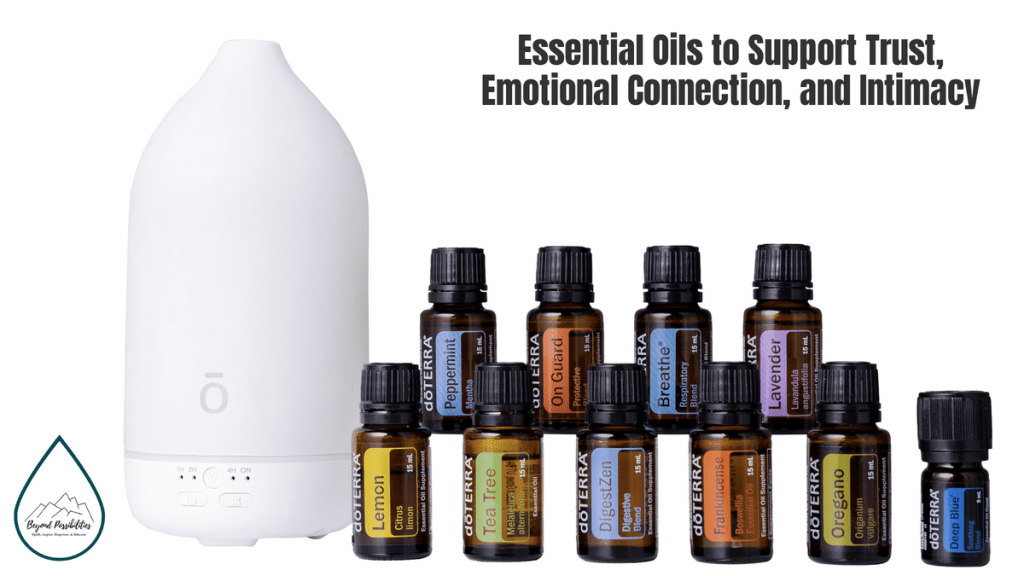
Healthy relationships are not built on chemistry alone—they are cultivated through emotional safety, trust, and intentional presence. When the nervous system feels calm and supported, it becomes easier to connect, communicate, and experience closeness on a deeper level.
Aromatherapy has been widely explored for its influence on mood, emotional regulation, and stress response. These factors directly affect how we show up in our relationships—especially during moments of vulnerability, conflict, or emotional fatigue. While essential oils are not a replacement for communication or relational work, they can serve as supportive tools that help create an environment where connection feels safer and more accessible.
When used aromatically, doTERRA® pure tested grade essential oils can become part of shared rituals—such as evening wind-down routines, intentional conversations, or date nights—helping shift the body and mind into a more receptive, present state.
Supporting Trust & Emotional Safety
Trust begins when the body feels safe. Oils that promote calm, grounding, and emotional regulation can support a sense of stability and reassurance—especially for those navigating stress, past experiences, or emotional walls.
Lavender
Lavender is one of the most researched essential oils for relaxation and emotional calm. Aromatically, it is commonly used to support restfulness and soothe heightened emotional states. When tension softens, conversations often feel less reactive and more open.
Best used: Diffused during quiet evenings, before meaningful conversations, or as part of a bedtime ritual.
doTERRA Balance® Grounding Blend
Balance® combines grounding woods and resins traditionally associated with stability and emotional centering. Aromatic use may support feelings of calm and equilibrium, which can help partners feel more emotionally anchored during moments of uncertainty or stress.
Best used: Diffused before difficult discussions or applied aromatically during moments when emotional regulation is needed.
Frankincense
Often associated with mindfulness and reflection, Frankincense is used aromatically to promote a sense of peace and emotional awareness. It can support intentional presence—helping individuals slow down and truly listen.
Best used: During intentional connection time, prayer, meditation, or reflective conversations.
Birch
Birch is traditionally associated with renewal, resilience, and emotional release. Aromatically, it is often used to support letting go of emotional burdens, rigidity, or lingering stress that can create emotional distance in relationships. Birch may be especially supportive when trust has been strained and the body is holding onto protective tension.
By encouraging emotional flexibility and a sense of internal reset, Birch can help create space for forgiveness, rebuilding trust, and moving forward together.
Best used:
Diffused during moments of emotional repair, after difficult conversations, or when working through lingering emotional weight from past experiences.
Supporting Emotional Connection
Emotional connection grows when individuals feel emotionally open, seen, and understood. Oils that uplift mood and encourage emotional expression may help soften emotional distance and promote warmth.
Bergamot
Bergamot is known for its bright, citrus aroma with calming undertones. Aromatically, it is often used to promote emotional balance and reduce feelings of overwhelm, creating space for lighter, more open interaction.
Best used: Diffused during shared activities or casual connection time to support a relaxed, positive atmosphere.
Wild Orange
Wild Orange is uplifting and energizing, commonly used to promote positive mood and emotional optimism. It can help shift heavy emotional states into a more playful, connected energy.
Best used: During daytime connection, shared laughter, or when emotional heaviness feels present.
Rose
Rose is often associated with compassion, emotional openness, and nurturing connection. Aromatically, it may support feelings of love, tenderness, and emotional closeness—particularly when vulnerability feels challenging.
Best used: During intentional connection rituals or moments of emotional sharing.
Supporting Intimacy & Closeness
Intimacy thrives when stress is reduced and emotional presence is increased. Oils that promote relaxation, sensual awareness, and emotional softness can help couples reconnect in meaningful ways.
Ylang Ylang
Ylang Ylang is traditionally used to support relaxation and emotional balance. Aromatically, it may help release tension and encourage a sense of ease and openness, supporting both emotional and physical closeness.
Best used: Diffused during date nights, evening wind-down routines, or intentional intimacy time.
Sandalwood
Sandalwood is grounding and calming, often associated with emotional depth and mindfulness. Aromatic use can support presence and emotional awareness, helping partners feel more connected and engaged.
Best used: During slow, intentional moments of connection or relaxation.
Creating Intentional Connection Rituals
The power of essential oils in relationships is not about the scent alone—it is about intention and presence. When oils are used intentionally, they become cues for pause, mindfulness, and emotional availability.
Simple rituals might include:
- Diffusing a chosen oil during weekly check-ins
- Using a calming blend before important conversations
- Creating a shared evening routine to unwind together
- Pairing aromatherapy with breathwork, prayer, or reflection
These moments reinforce emotional safety and trust by signaling to the nervous system that it is safe to slow down and connect.
*The information provided is for educational purposes only. doTERRA essential oils are not intended to diagnose, treat, cure, or prevent any disease. Individual experiences may vary.
References (APA 7)
Algoe, S. B., Gable, S. L., & Maisel, N. C. (2010). It’s the little things: Everyday gratitude as a booster shot for romantic relationships. Personal Relationships, 17(2), 217–233. https://doi.org/10.1111/j.1475-6811.2010.01233.x
Debrot, A., Schoebi, D., Perrez, M., & Horn, A. B. (2013). Self-expansion and flow in couples’ momentary experiences: An experience sampling study. Journal of Personality and Social Psychology. https://pubmed.ncbi.nlm.nih.gov/18729702
Algoe, S. B., & Fredrickson, B. L. (2013). The social functions of the emotion of gratitude via expression. Emotion, 13(4), 605–609. (Referenced within relational gratitude literature)
(To strengthen your post, you may add further specific citations on relationship maintenance behaviors and emotional intimacy from your own library or other peer-reviewed sources.)




 Beyond Possibilities