

Music begins. The body responds. Before words form, emotion is already in motion.
Dance has long been a language of the heart—used across cultures to express joy, grief, celebration, and release. Today, science confirms what many have felt intuitively: when we move rhythmically, we don’t just exercise the body—we process emotion, regulate stress, and reconnect with ourselves.
A growing body of science shows that participating in dance can improve mood, reduce anxiety and depression, and enhance emotional regulation across ages and settings. A growing body of science shows that participating in dance can improve mood, reduce anxiety and depression, and enhance emotional regulation across ages and settings.
What Science Says About Dance and Emotional Well‑Being
Dance Improves Mood and Reduces Anxiety and Depression
Scientific reviews of dance interventions report significant reductions in symptoms of depression, anxiety, and stress compared with no‑dance control conditions. Across multiple dance styles—from tango to Latin dance—participants consistently show improvements in mood and overall mental health (Koch, 2023).
Meta‑analytic findings further indicate that dance is equally or more effective than other forms of physical activity for improving quality of life and reducing anxiety and depressive symptoms. These outcomes are thought to be driven by dance’s unique blend of rhythmic movement, creative expression, and social engagement (Mann et al., 2023).
Among older adults, dance interventions have also been shown to improve mental health indicators, including depressive symptoms and neuropsychiatric outcomes, highlighting dance as a valuable, accessible approach across the lifespan (Taber et al., 2023).
Dance Supports Emotional Regulation
Dance Movement Therapy (DMT)—a structured, clinical application of movement—has been examined for its role in emotional regulation. Scientific reviews indicate that DMT supports emotional integration, expression, and regulation by engaging the body as a pathway to emotional processing (Smith & Jones, 2024).
Dance Enhances Social Connection and Positive Emotion
Science also demonstrates that dance supports social bonding and positive affect. Group dance participation has been associated with increased social connection and emotional well‑being when compared with other creative activities, suggesting that shared movement amplifies emotional resilience (Lee et al., 2025).
Key Findings from the Science
- Improved mood and reduced depressive symptoms following dance participation (Koch, 2023; Mann et al., 2023)
- Decreased anxiety and stress across diverse populations (Koch, 2023; Taber et al., 2023)
- Enhanced emotional regulation and expression through embodied movement (Smith & Jones, 2024)
- Increased social connection and positive emotional states (Lee et al., 2025)
How Dance Influences Emotions
1. Movement and Emotion Are Neurologically Linked
Dance combines aerobic activity with expressive movement, activating neurochemical pathways associated with improved mood while allowing emotions to be physically expressed and processed (Koch, 2023).
2. Embodied Awareness Supports Emotional Regulation
By engaging rhythm, coordination, and body awareness, dance naturally recruits attention and executive functioning. This embodied focus supports greater emotional control and integration, as observed in therapeutic movement settings (Smith & Jones, 2024).
3. Connection Through Movement Enhances Emotional Health
Dancing with others introduces social interaction that amplifies positive affect and reduces isolation—an important contributor to emotional well‑being (Lee et al., 2025).
How to Use Dance and Aroma Together: A Simple Practice
Whether dancing alone at home or in a group setting, pairing intentional movement with aromatic support can deepen emotional awareness and release.
A simple practice:
- Choose music that matches your emotional intention (uplifting, grounding, expressive, calming).
- Add a diffuser blend that complements that intention.
- Begin with gentle movement, allowing your body to respond naturally to the rhythm.
- Focus on breath and sensation rather than choreography.
- Close with stillness, noticing emotional shifts.
This approach works well for personal self-care, group classes, or emotional wellness sessions.
doTERRA Diffuser Blends to Support Emotional Experience While Dancing
Aromatherapy can support emotional states that complement the benefits of dance. The following doTERRA diffuser blends are designed to enhance mood, focus, grounding, and connection while dancing. Use essential oils according to safety guidelines.

Joyful Motion Blend
- 3 drops Citrus Bliss®
- 2 drops Lavender
- 2 drops Bergamot
Supports uplifting energy and emotional lightness.
Flow State Dance Blend
- 3 drops Wild Orange
- 2 drops Peppermint
- 1 drop Ylang Ylang
Encourages focus, rhythm, and creative flow.
Grounded Expression Blend
- 3 drops Frankincense
- 2 drops Balance®
- 1 drop Vetiver
Promotes grounding and body‑mind connection.
Calm Release Blend
- 3 drops Serenity®
- 2 drops Roman Chamomile
- 1 drop Lavender
Supports stress reduction and emotional release.
Connect and Socialize Blend
- 3 drops Bergamot
- 2 drops Wild Orange
- 2 drops Birch
Encourages positive social energy and shared joy.
Closing Thoughts
Science continues to affirm what many feel intuitively: dance is a powerful emotional tool. By integrating physical movement, creative expression, and social connection, dance supports emotional health in ways that extend far beyond exercise. When paired with intentional aromatherapy using doTERRA essential oils, dance becomes a holistic, heart‑centered practice for emotional well‑being.
If this topic resonates with you and you’d like to explore movement and emotions more deeply, I invite you to continue the journey through other blogs here on Beyond Possibilities. You’ll find additional reflections and practices on mindful movement, AromaDance, and how emotions live and release through the body. Each piece builds on the understanding that when we move with intention, we create space for healing, clarity, and connection—one breath and one movement at a time.
Previous Resources on Movement, Emotion & Expressive Practices
AromaDance
A deep look at AromaDance as a modality that combines essential oils with expressive movement to release stress, encourage creative flow, and open emotional expression through movement.
Read it here: https://beyond-possibilities.net/mentoring-and-classes/aromadance/
Movement and Emotion: The Science of Feeling Through Motion
A thoughtful exploration of how emotions are embodied, how movement (including dance) affects the autonomic nervous system, and practical movement techniques to support emotional regulation and resiliency.
Read it here: https://beyond-possibilities.net/2025/10/17/movement-and-emotion-the-science-of-feeling-through-motion/
From Stuck to Free: Transform Your Wellness Journey with Mind-Body Practices
A holistic wellness post that includes how movement and dance release stagnant energy, improve mind-body connection, and support emotional well-being alongside meditation, aromatherapy, and energy healing.
Read it here: https://beyond-possibilities.net/2025/03/05/from-stuck-to-free-transform-your-wellness-journey-with-mind-body-practices/
Music, Movement, and Mood – Just Dance (linked within Mindful Movement Classes page)
A resource referenced on the Mindful Movement Classes page, offering an introduction to how music and spontaneous dance can uplift mood and release emotion. (Note: this is linked from the class description rather than a standalone blog post.)
Explore Mindful Movement Classes here: https://beyond-possibilities.net/mentoring-and-classes/mindful-movement-classes/
FDA Compliance Note
The information shared in this article is intended for educational purposes only. Essential oils are not intended to diagnose, treat, cure, or prevent any disease. Individual responses to aromatherapy may vary. Always follow manufacturer safety guidelines when using essential oils, especially around children, pets, or individuals with sensitivities.
References (APA 7)
Koch, S. (2023). Evidence of the effects of dance interventions on adults’ mental health: A systematic review. Frontiers in Psychology, 14, 1180566. https://pubmed.ncbi.nlm.nih.gov/37287281/
Mann, L., et al. (2023). The effectiveness of dance interventions on psychological and cognitive health outcomes compared with other physical activity. Arts & Health. https://pubmed.ncbi.nlm.nih.gov/38270792/
Taber, A., et al. (2023). Effects of dance therapy on cognitive and mental health in adults aged 55+ with mild cognitive impairment: A systematic review and meta‑analysis. BMC Geriatrics, 23, 553. https://bmcgeriatr.biomedcentral.com/articles/10.1186/s12877-023-04406-y
Smith, J., & Jones, R. (2024). The role of dance movement therapy in enhancing emotional regulation: A literature review. The Arts in Psychotherapy. https://pubmed.ncbi.nlm.nih.gov/39170197/
Lee, H., et al. (2025). The impact of performing arts on mental health, social connection, and creativity in university students: A randomized controlled trial. BMC Public Health, 25, 312. https://bmcpublichealth.biomedcentral.com/articles/10.1186/s12889-025-22552-3


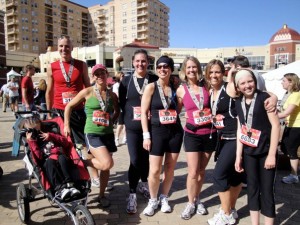
 In 2007 I started making better choices with my food and working out daily. Then I started running, like really running. I started with 5Ks. In 2008, we were blessed with a son and I continued on my healthy path. Once he was born I got back in to running. I got back to doing 5Ks and then work up to doing a Half marathon. My first was as part of team
  I aslo participated in the Wasatch Back Ragnar Relay Race. This was definitely the healthiest time in my life.
 In April of 2011, I ran my second half marathon and even reached my goal for my finishing time. But I also tore the meniscus in both knees. This lead to a lot of pain and surgery. The knee surgeries made it impossible to ever run again. I never fully recovered physically or emotionally.
 Beyond Possibilities