
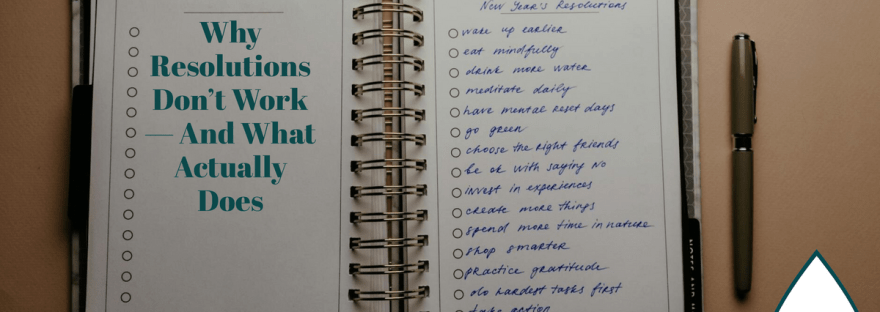
Every year, resolutions promise transformation. Eat better. Move more. Be more disciplined. And every year, many of those promises quietly dissolve, often replaced with guilt, frustration, and the belief that something is wrong with you.
But science tells a different story.
Resolutions don’t fail because people lack motivation or willpower. They fail because they are built on systems that ignore how the human body, brain, and nervous system actually create lasting change.
This is your permission slip to stop forcing yourself into frameworks that were never designed for your body, your strengths, or your life — and instead choose approaches that honor how change truly works.
The Resolution Myth
Traditional resolutions rely on rigid goals, arbitrary start dates, and outcome-focused expectations. While the idea of a “fresh start” can temporarily boost motivation, research shows that temporal landmarks alone do not sustain long-term behavior change without supportive structures embedded into daily life (Kooij et al., 2015).
Many resolutions are also vague (“be healthier”) or overly ambitious, leaving no clear path for action. When setbacks occur — as they inevitably do — people often interpret them as personal failure rather than part of the learning process. This mindset increases stress and disengagement, making consistency less likely.
Why Willpower Isn’t the Answer
Sustainable change is not a function of force. It is a function of conditions.
Behavioral science consistently shows that habits stick when they are:
- Small and repeatable
- Anchored to existing routines
- Supported by emotional regulation and internal motivation
When stress levels are high, the brain prioritizes survival over growth. Under these conditions, willpower is unreliable. This is why systems rooted in guilt and pressure tend to collapse — they activate stress responses rather than support learning and adaptation.
Mindset, Self-Talk, and the Body: What the Science Shows
Research in mind-body medicine demonstrates that cognitive and emotional states meaningfully influence the physiological environments in which healing and change occur. Harvard Health Publishing has documented that the brain and immune system communicate bidirectionally, meaning thoughts, emotions, and stress perception can influence immune signaling, inflammation, and recovery processes (Harvard Health Publishing, n.d.).
Expanding on this connection, Harvard psychologist Ellen Langer’s work on mindfulness and perception has shown that psychological framing can measurably affect physical outcomes. In controlled research, altered perceptions of time significantly influenced the rate of physical healing, including bruise recovery, underscoring the role of awareness and expectation in bodily processes (Aungle & Langer, 2023).
Further supporting this, contemporary reviews of self-talk research demonstrate that intentional internal dialogue improves emotional regulation, stress resilience, and behavioral consistency — all factors that indirectly but powerfully support physical wellbeing by shaping nervous system responses and health-related behaviors (Brinthaupt & Morin, 2023).
Taken together, this evidence reframes change entirely: sustainable transformation does not emerge from self-criticism or force, but from cultivating internal conditions — safety, supportive self-talk, and reduced stress — that allow the body to function as designed.
Foundational Wellness Over Forced Change
Rather than resolutions that demand perfection, research supports foundational practices that build resilience and capacity over time:
- Consistent sleep and recovery
- Nourishment that stabilizes energy and mood
- Gentle, repeatable movement
- Emotional regulation and stress support
When these foundations are in place, behavior change becomes less about discipline and more about momentum.

Movement That Feels Good Actually Lasts
Movement is often positioned as punishment for not being “enough.” Science tells a different story.
Positive emotional responses to movement are among the strongest predictors of long-term adherence. Meta-analytic research shows that when physical activity is experienced as enjoyable rather than aversive, individuals are significantly more likely to sustain it over time (Rhodes et al., 2021). Moderate, self-selected activities — such as walking, gentle strength training, or mindful movement — consistently produce more positive affect than high-intensity approaches that may feel overwhelming, particularly early on.
Additionally, environments that support autonomy, competence, and connection further enhance intrinsic motivation and enjoyment, reinforcing consistency without relying on pressure or obligation (Boiché & Sarrazin, 2013).
Simply put: consistency grows from enjoyment, not punishment.
Find music that inspires you.
Body Groove just release a Manifesting Magic Through Movement that is beautiful. (I am not an affiliate, but a huge fan of their playlists.)
Supportive Tools for Sustainable Change: Essential Oils and Supportive Research
While behavior change is primarily psychological and neurological, supportive tools can meaningfully improve the internal and external environments in which habits grow. When stress is reduced and emotional regulation is supported, the body is better positioned to sustain consistent, health-supportive behaviors. Within this context, aromatherapy and essential oils have been studied for their effects on stress perception, mood regulation, sleep quality, and nervous system balance.
Stress, Mood, and Sleep Support
Randomized controlled trials have demonstrated that inhalation of specific essential oil blends can significantly reduce perceived stress and improve sleep quality — two foundational elements for recovery, emotional regulation, and sustainable behavior change. Improved sleep and reduced stress are strongly associated with better adherence to wellness routines, improved mood stability, and enhanced capacity for habit formation (Kim et al., 2017; Lee et al., 2021). These findings support the use of aromatherapy as a complementary practice to help lower physiological stress load and support restorative processes essential for long-term change.
Nervous System Effects
Scoping reviews of essential oil research indicate measurable effects on emotional modulation, anxiety reduction, stress regulation, sleep quality, and mental fatigue. These effects are believed to occur primarily through olfactory and respiratory pathways that influence limbic system activity and neurochemical signaling involved in emotional and autonomic regulation (de Rapper et al., 2023). By supporting nervous system balance, aromatherapy may reduce friction around daily wellness behaviors and improve consistency without relying on force or willpower.

AromaTouch® Technique Research
Pilot trials examining structured essential oil application procedures, such as the AromaTouch® Technique, have demonstrated enhanced relaxation responses and reductions in biomarkers associated with stress and inflammation when compared to control touch procedures (Bennett et al., 2017). These findings suggest that intentional, rhythmic application of essential oils combined with touch may further support parasympathetic activation, contributing to improved recovery and emotional regulation.
Importantly, evidence consistently supports essential oils as supportive tools, not drivers, of personal transformation. They assist the environment of change — reducing stress, supporting emotional balance, and improving recovery — rather than acting as the cause of behavioral or psychological change. When used alongside aligned mindset work, movement that feels good, and foundational wellness practices, essential oils can help make sustainable change feel more accessible and embodied.
A New Way Forward
This is not about lowering standards. It is about raising self-respect.
When you stop forcing yourself into systems that rely on guilt and willpower, and instead build change around how your body and brain actually work, something shifts.
Change becomes kinder.
More realistic.
And far more sustainable.
References (APA 7)
AromaTouch® technique trial:
Author(s). (Year). Immediate and lasting effects of the dōTERRA AromaTouch Technique on autonomic function and biomarkers: A pilot trial. Journal of Integrative Medicine and Therapy. avensonline.org
Aungle, P., & Langer, E. J. (2023). Physical healing as a function of perceived time. Scientific Reports, 13, Article 18454. https://doi.org/10.1038/s41598-023-45393-2
Behavior change and motivation theory:
Alberts, L., Lyngs, U., & Lukoff, K. (2024). Designing for sustained motivation: A review of Self-Determination Theory in behaviour change technologies. arXiv. arXiv
Boiché, J., & Sarrazin, P. (2013). Peers’ influence on exercise enjoyment: A self-determination theory approach. Psychology of Sport and Exercise, 14(4), 461–468. https://pubmed.ncbi.nlm.nih.gov/24150130/
Brinthaupt, T. M., & Morin, A. (2023). Self-talk: Research challenges and opportunities. Frontiers in Psychology, 14, 1210960. https://doi.org/10.3389/fpsyg.2023.1210960
Essential oil nervous system effects scoping review:
de Rapper, S., et al. (Year). The effects of essential oils on the nervous system: A scoping review. PubMed summary. PubMed
Harvard Health Publishing. (n.d.). Can our brain talk to our immune system? Harvard Medical School. https://www.health.harvard.edu/mind-and-mood/can-our-brain-talk-to-our-immune-system
Kooij, A., et al. (2015). Temporal landmarks and aspirational behavior. Management Science, 61(11), 2695–2714.
Lee, J. A., et al. (2021). Effect of aromatherapy on sleep quality of adults and elderly people: A systematic literature review and meta-analysis. Complementary Therapies in Medicine, 60, 102739. https://doi.org/10.1016/j.ctim.2021.102739
Resolution success longitudinal data:
University research summary. (2025). New Year’s resolution adherence statistics. UNSW Newsroom. UNSW Sites
Rhodes, R. E., et al. (2021). Affective and enjoyment responses to physical activity: A meta-analysis. Health Psychology Review, 15(2), 167–186. https://pubmed.ncbi.nlm.nih.gov/34112041/
Studies on inhalation aromatherapy effects on stress, sleep quality, and mood:
Kim, H. J., et al. (2017). The effects of aromatherapy essential oil inhalation on stress, sleep quality, and depression in healthy adults. European Journal of Integrative Medicine, 12, 79–86. ScienceDirect
Xu, J., et al. (2025). The effects of Rosa damascena aromatherapy on anxiety, stress, hemodynamics, and sleep: A systematic review and meta-analysis. Frontiers in Public Health. https://pubmed.ncbi.nlm.nih.gov/41262694/

 Beyond Possibilities