

Communication is at the heart of every family relationship. It’s how we express love, set boundaries, and navigate challenges together. Yet, as our children grow—from tweens discovering independence, to teens testing limits, to young adults stepping into the world—communication often becomes one of the trickiest parts of parenting.
Whether you’re trying to get an 11-year-old to clean up their room, discussing curfew with a 16-year-old, or respecting the independence of your 22-year-old, the way you communicate can either strengthen connection or create distance.
Why Communication Matters
Research consistently shows that strong family communication builds resilience, reduces conflict, and helps children thrive emotionally (Alejandra & Kataoka, 2017; Busby & Chiu, 2017). For parents, good communication creates more cooperation at home and a deeper sense of trust—even during tough conversations.
The challenge? Not every style of communication is equally effective.
The Four Common Communication Styles
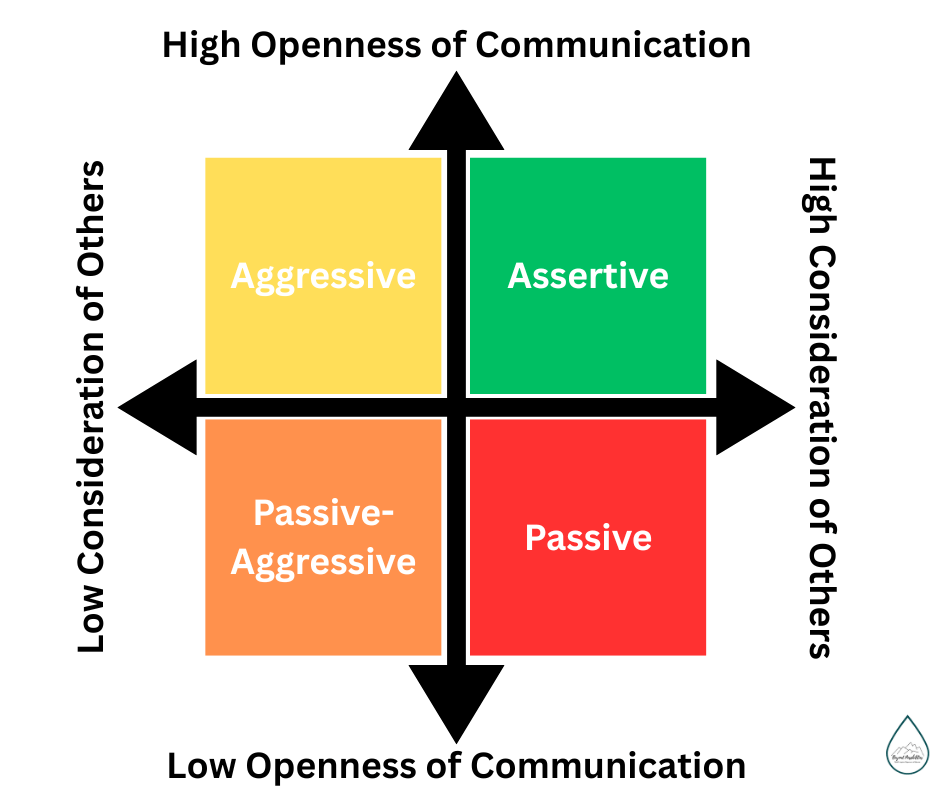
Communication can be mapped across two dimensions: openness of communication (how honestly we share) and consideration for others (how much we respect another’s needs). Together, these create four styles:
- Aggressive – Open but lacking respect for others.
- Passive – Respectful but withholding feelings or needs.
- Passive-Aggressive – Indirect, masking frustration with sarcasm or avoidance.
- Assertive – Honest and open while still considering others.
Most of us use a mix of these styles depending on stress, habits, or circumstances. But the healthiest families lean on assertive communication, because it balances honesty with respect.

Real-Life Examples
To bring these styles to life, here are a few parent–child situations across the tween-to-twenty spectrum:
- Aggressive (Teen): Your 16-year-old comes home past curfew. You yell, “You’re completely irresponsible!”
- Passive (Young Adult): Your 24-year-old borrows your car and returns it on empty. You say, “It’s fine, don’t worry about it,” while stewing inside.
- Passive-Aggressive (Teen): Your 15-year-old forgets chores. You mutter, “Guess I’m the maid in this house,” while slamming the trash down.
- Assertive (Tween): Your 12-year-old resists homework. You say, “I know you’re tired, but this needs to be finished. Let’s set a timer and take breaks.”
Can you see how each style affects the relationship differently?
Takeaway for Parents
There’s no such thing as perfect communication, but being aware of how you’re communicating is the first step. Ask yourself:
- Am I being honest about my needs and feelings?
- Am I showing respect for my child’s needs, even as they grow more independent?
- Do I shift my approach when talking to my 11-year-old versus my 21-year-old?
The goal isn’t to avoid conflict—it’s to handle it in ways that build trust and connection.
Try This at Home
This week, pay attention to one interaction with your child. Notice your communication style in the moment. If it’s not assertive, pause and reframe your words. For example:
- Instead of: “You never listen to me!”
- Try: “I feel frustrated when I have to repeat myself. Can we figure out a better way to handle reminders?”
Small shifts like this can change the whole tone of family life.
Final Thoughts
Parenting tweens through twenties is a balancing act of guidance, boundaries, and letting go. Communication is the bridge that carries us through these stages. By becoming aware of your style—and choosing assertiveness more often—you’ll nurture respect, trust, and connection with your children at every age.
Whether you attended our recent family communication class or are simply exploring on your own, this resource is here to remind you: the way you speak shapes the way your family thrives.
 Beyond Possibilities