
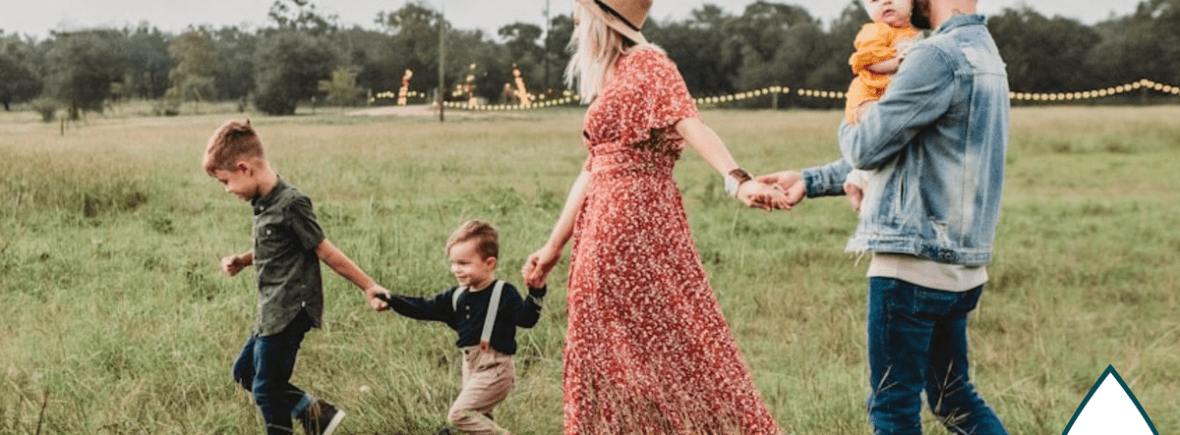
Our mission is to uplift family systems by teaching research-based practices that heal, connect, and empower every individual — aligning with holistic health of mind, body, and spirit.
What is Family Life Education
Family Life Education can be focused on individual families, as well as group classes and workshops. The emphasis of this education is to empower families to thrive not just survive. The focus is on strengthening families by teaching research-based skills that are proactive verse reactive with the goal for creating confident, resilient and connected families before challenges become a crisis.
Whether you’re a parent, couple or individual, Family Life Education is designed to be inclusive, supportive and relatable. The encouraging environment welcomes diverse experiences and honors cultural differences while applying practical tools that can be applied to all families.
It is education not counseling, therapy or crisis management. There is no judgement, labels or risk. It is a safe, uplifting space where participants gain lifelong skills in communication, decision-making, and relationship building.
Family Communication
Studies have shown that when families have good communication skills, children are more likely to be open and there is less conflict between parent and child. Creating good communication skills before conflict arises improves the ability to resolve conflict constructively. We encourage parents to work on their communication with their children together for the best results.

Join our interactive workshops for parents with children ages 11-25.
Learn tools you can use and then teach your children to improve communication and create an atmosphere where you and your children feel safe, heard and respected.
Three Part Family Communication Workshop
Communication Awareness and Foundations
This workshop is designed to give parents of children from their tweens to their twenties tools to create healthy relationships through improving their communication skills.
Building Bridges: Understanding Family Communication Styles Blog
Building Trust through Positive Communication
This workshop will help parents of children from their tweens to their twenties strengthen trust and cooperation at home by refining how they speak and listen to each other.
Building Trust Through Positive Communication: How Word Choice Builds Trust in Families
Communication Journal 2Download
Putting it All Together
This workshop will help parents of children from their tweens to their twenties brings everything from the previous workshop together, giving parents the skills and confidence to build healthier family relationships through communication.
Putting It All Together: Awareness, Word Choice, and Trust in Family Communication
Communication Journal 3Download
Words Matter: Challenging the Old Adage
Contact Information
LeeAnn Mason
801-410-0088
leeann@beyond-possibilities.net
Resources
Scholarly Resources
Anthony, M. (2015). Becoming a spiritually healthy family: avoiding 6 dysfunctional parenting styles. David C. Cook.
Alejandra, A.M, & Kataoka, S. (2017). Family Communication Styles and Resilience among Adolescents. Social Work, 62(3), 261-269 https://doi.org/10.2307/44652409
Busby, D.M. & Hsin-Yao Chiu, L. (2017). Perceived Conflict Styles of Adult Children and their Parents: What is the Connection? Journal of Child and Family Studies, 26(12). 3412-3424. https://doi.org/10.1007/s10826-017-0839-9
Family Strengths: Communication. (2020) Forever Families. https://foreverfamilies.byu.edu/family-strengths-communication
Kang, S. Y., Lee, J.A., & Kim, Y.S. (2019). Impact of family communications on self-rated health of couples who visited primary care physicians: A cross-sectional analysis of Family Cohort Study in Primary Care. PLOS ONE, 14(3), e0213427. https://doi.org/10.1371/journal.pone.0213427
Lin, T. T.C. (2022). Nomophobia and phubbing: examining affective smartphone communication and family cohesion among youths. Behavior & Information Technology, 1-15. https://doi.org/10.1080/0144929X.2022.2111272
Ouyang, Q., & Cheung, R.Y.M. (2023). Mother-child versus father-child conflict and emerging adults’ depressive symptoms: The role of trust in parents and maladaptive emotional regulation. Journal of Adult Development, 30(2), 145-157. https://doi.org/10.1007/s10804-022-09431-1
Rosland, A.->., Heisler, M., & Piette, J. D. (2011. The impact of family behaviors and communication patterns on chronic illness outcomes: A systematic review. Journal of Behavioral Medicine, 35(2), 221-239. https://doi.org/10.1007/s10865-011-9354-4
Saldaris, S. T., & Down, J. (2024). Parents-reported outcome measures evaluating communication in individuals with rare neurodevelopmental disorders: A systematic review. International Journal of Language & Communication Disorders, 59(6), 1320-1347. https://doi.org/10.1111/1460-6984.13094
Winsberg, M. (2022). Speaking in Thumbs. Doubleday.
Yang, Bergman, K.N, & Cummings, E.M (2024). Mother-adolescent communication and father-adolescent communication: Analyzing a 4-week family intervention using multi-infomant data. Journal of Research on Adolescence, 35(1). https://doi.org/10.1111/jor.12995
Zapf, H., Boettcher, J., Haukeland, Y. B., Orm, S., Coslar, S., Wiegand-Grefe, S., & Fjermestand, K. (2022). A systematic review of parent–child communication measures: Instruments and their psychometric properties. Clinical Child and Family Psychology Review, 26(1) 121-142. https://doi.org/10.1007/s10567-022-00414-3
Additional Resources
Columbia Associate. (2024) The Importance of Healthy Family Communication. Columbia Associate. https://www.columbiapsychiatry-dc.com/counseling-blog/the-importance-of-healthy-family-communication/
DS Psychology Group. (2017) 7 communication styles. DS Psychology Melbourne. https://dspsychology.com.au/7-communication-styles/
Ellingwood, J. (2024) 10 Healthy Family Communication Skills & How to Implement Them. Anchor Light Therapy Collective. https://anchorlighttherapy.com/family-communication/
How to Improve Communication between Family Members. (2025) https://www.heartwisesupport.org/post/how-to-improve-communication-between-family-members
How to Improve Your Word Choice (and Why You Should). (2019) Spin Sucks. https://spinsucks.com/communication/word-choice/
Liu, M. (2016). Verbal Communication Styles and Culture. Oxford Research Encyclopedia of Communication. https://doi.org/10.1093/acrefore/9780190228613.013.162
Lohia, S. (2023) The 5 communication styles and how to use them effectively. The Predictive Index. https://www.predictiveindex.com/blog/the-5-communication-styles-and-how-to-use-them-effectively/
MHH. (2024) Understanding Communication Styles – Mental Health Hotline. Mental Health Hotline. https://mentalhealthhotline.org/understanding-communication-styles
The Importance of “I-Statements in Relationships. (n.d.) www.tonyrobins.com https://www.tonyrobbins.com/blog/words-matter-you-vs-i
The Role of Communication in Strengthening Family Bonds. (2025) Precisionfamilytherapy.com https://www.precisionfamilytherapy.com/post/the-role-of-communication-in-strengthening-family-bonds
 Beyond Possibilities